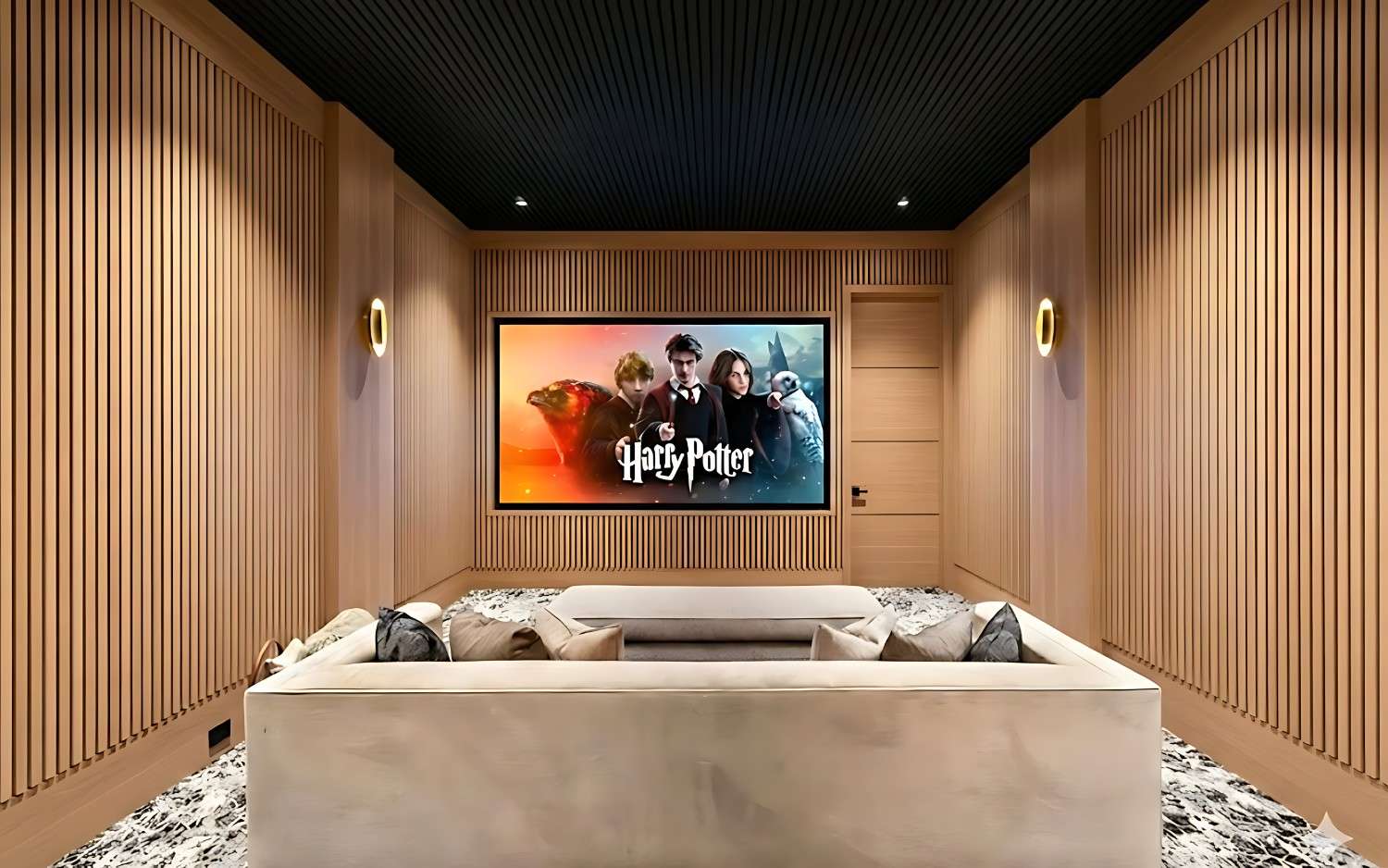
If you’re planning to create a great home theater in your house, remember that a big screen and a good sound system alone aren’t enough — you also need to pay attention to the room itself. If you don’t, you may run into many problems, such as not being able to understand dialogue, excessive booming bass, or distortion — common issues that can ruin your movie-watching experience.
The solution is acoustic wall panels, which can make your room feel like a professional cinema because they’re specially designed to absorb sound waves, making dialogue clearer while also providing an attractive look. The most premium and trusted option is premium thermowood acoustic wall panels. Let’s take a closer look at which sound‑absorbing acoustic wall panels are best and how they can turn your room into a professional theater.
What are Acoustic Wall Panels?
Acoustic wall panels are panels that absorb sound waves. When a sound wave hits a hard surface — like glass, a floor, or a wall — it bounces back and creates an echo or reverberation. That echo or reverberation is the biggest problem in home theaters: dialogue becomes hard to hear, the sound gets muddy, and the movie experience is ruined.
Wooden acoustic wall panels solve this problem and make the room acoustically balanced. The most important question is which material works best to eliminate the problem while giving the walls a truly premium look. The best answer is Premium Thermowood Wall Panels.
What is Thermowood and Why is it Ideal for a Home Theater?
Thermowood is created using a special technique in which natural wood is heat-treated in chambers at around 190°C to 210°C. This process typically lasts about 48–72 hours and alters the wood’s internal structure, resulting in wood that:
- Wood more durable
- Resists moisture
- Protected from insects like termites
- Does not expand or shrink
- Develops a natural warm color and a very attractive texture
This makes thermowood not only excellent at managing sound but also gives your room a premium, luxurious look.
Which Types of Thermowood Acoustic Panels are Available and Which One is Right for You?
Wood Slat Wall Panels
This is the most popular and modern design, made from thin wooden slats. These panels are specially installed on walls or ceilings to not only improve sound quality but also give your interior a premium look. They are considered ideal for home theaters because:
- They absorb sound and eliminate disturbances
- They enhance the cinematic, immersive experience in a home theater
- They are effective at controlling noise
- With regular maintenance, they will look new for a long time
Perforated Wooden Acoustic Panels
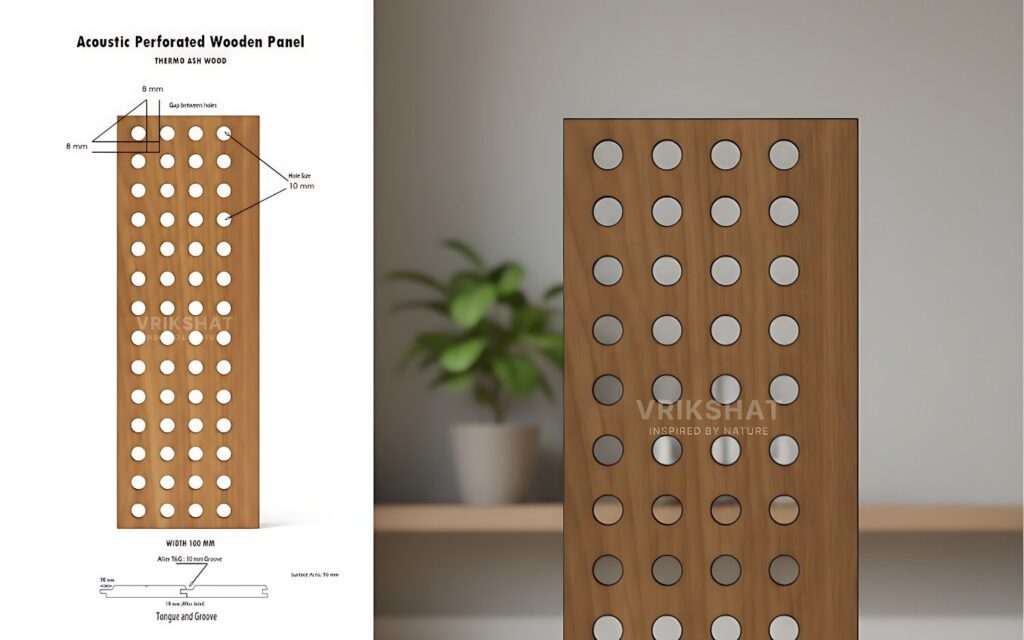
Perforated wooden acoustic panels are a specialized type of acoustic panel specifically designed for sound control. These panels feature small holes, called perforations, drilled into the wood in a scientific pattern to absorb sound waves. This prevents sound from bouncing and creating echoes when movies or music are played in a home theater, allowing the panels to absorb unwanted sound.
Key Features Include:
- High sound absorption
- Echo control
- Clear dialogue
- Bass control
- Noise reduction
- Low maintenance
Walnut Wall Panels
Walnut wall panels are known for their rich, dark brown color and smooth texture, with a finish that resembles natural walnut wood. They give walls an elegant, high-end appearance and are popular for home theater interiors because they create a premium, cinema-like feel. In a home theater, walnut panels help create a cozy, immersive environment — their deep color pairs perfectly with appropriate sound and lighting setups to create a cinematic atmosphere. While walnut panels significantly enhance the decor and style of a home theater, if your primary goal is to improve acoustic performance, you should choose perforated wall panels.
Customized Acoustic Panels
Customized acoustic panels are tailored to meet each customer’s specific requirements because every home theater has a different layout, sound system, and interior. For this reason, customized panels are considered a highly precise solution that improves both sound quality and wall design. These panels are designed with the room shape, speaker placement, ceiling height, and seating arrangement in mind to control echoes, noise, and other disturbances. The biggest advantage of customized panels in a home theater is that they provide the best combination of aesthetic wall design and sound control. You can have them tailored to match your home theater’s theme and give your space a professional, cinema-like, immersive experience.
Key features of Customized Acoustic Panels:
- Can be tailored to suit the room and interior
- Make dialogue and music sound clear and natural
- Provide modern interior styling
- Available in a variety of colors and textures
- Multipurpose use — for home theaters, studios, offices, and auditoriums
Thermowood vs. Other Acoustic Materials Comparison
| Features | Premium Thermowood | Foam Panels | Fabric Panels | Regular Wood |
|---|---|---|---|---|
| Durability | 25+ Years | 3-5 Years | 7-10 Years | 10-15 Years |
| Moisture Resistance | Excellent | Poor | Average | Poor |
| Aesthetics | Premium/Luxury | Basic | Moderate | Good |
| Customization | Full | Limited | Moderate | Moderate |
| Eco-Friendly | Yes (Heat Treatment) | No | Partial | Depends |
| Sound Absorption | Excellent | Good | Good | Average |
Home Theater Setup Guide: Mistakes to Avoid
Most people rush when installing acoustic panels. They’ll carefully research and spend lakhs on a sound system, but when it comes to acoustic panels they often install them without much thought. The result is that even an expensive sound system ends up sounding like it’s in an ordinary room. So let’s talk about the common mistakes home theater builders make and why thermowood perforated acoustic panels are the best option for your home theater.
Explaining Foam Panels as Acoustic Treatment
It’s often seen that cheap wedge foam panels sold in the market (150–500 rupees) claim to absorb high frequencies above about 2000 Hz. The real problems in a home theater, however, are in the mid and low frequencies—roughly 100–800 Hz. That is the range that makes dialogue sound muddy and causes bass to boom in the corners. For that reason, foam panels are almost useless in this range. A much better solution is perforated wooden acoustic panels made from thermowood. These panels have precisely drilled holes that act like Helmholtz resonators. Sound waves enter the holes and are converted into heat energy inside the panel, which is then absorbed. This process works effectively across the midrange from about 100 Hz to 2000 Hz.
Only Doing Absorption and Forgetting Diffusion
Many people focus too much on sound absorption in their home theater rooms and forget about diffusion. If the room’s walls are covered with absorbing material, the room will become dead and dry-sounding, making the sound lifeless and the listening experience uncomfortable. That is why large cinemas and recording studios balance both absorption and diffusion.
Fabric-wrapped fiberglass or foam panels only absorb; they have no natural ability to diffuse, so you have to install separate diffuser panels, which can be quite expensive.
That’s why the design of thermowood perforated panels — the hole pattern, the surface of the panel, and the natural density of the wood — together enable both absorption and diffusion to work simultaneously, keeping the room’s acoustic character natural and balanced.
Ignoring Bass Frequencies
After building a home theater, the most annoying problem is bass buildup, especially in the room’s corners. When the subwoofer produces low-frequency sound, those waves accumulate in the corners — a phenomenon called standing waves — so the bass can be very strong in one spot and weak in another. Foam or thin fabric panels aren’t fully effective at solving this, so you can choose thermowood wall panels instead.
Because these panels are made from heat-treated timber whose cellular structure is treated up to 200°C, the wood’s density and acoustic mass naturally increase during the process. When they are installed on a wall, an air gap is left between the wall and the panel, which allows them to start effectively absorbing low frequencies. Foam panels, even at 5 cm or 10 cm thickness, cannot handle bass the way these Thermowood perforated panels can.
Not Considering the Climate
This mistake is often made by Indian home theater builders. In some cities like Mumbai, Chennai, Kochi, and Kolkata, humidity can reach 70–90% during the monsoon, while places like Delhi and Pune experience large seasonal swings in humidity. Fabric-wrapped and fiberglass panels absorb moisture, which creates a risk of mold and causes them to fail long before their time. The solution is heat-treated wood (thermowood). It absorbs much less moisture and can reduce humidity uptake by around 40–50%, allowing panels to last for years. In such locations you can install these panels in October and still get the same performance during the June monsoon.
Thinking About Aesthetics Later
Some people are in such a hurry that after ordering acoustic panels, when it comes time to install them they realize the panels look ugly. So you should place orders only after considering the aesthetics of the acoustic materials, for example:
- Foam panels come in grey or black wedge shapes that you can stick to the walls; after that the room starts to feel like a recording studio or more like a plain carton.
- Fabric-wrapped panels perform adequately, but unless you use premium fabric and proper framing, your luxury home theater can end up looking like a simple corporate space.
- Thermowood perforated panels are a deep, rich chocolate-brown wood that gets that color through heat treatment, which also makes it stronger and gives it a very premium appearance. These panels create architectural patterns without any coating or staining, and they look genuinely beautiful. If you’re mainly considering decorative acoustic options, you might also consider slat-style acoustic wall panels.
Ignoring the Front Wall and Ceiling
Most people treat the side walls and stop there.
The front wall—where your screen is— is also critical. Reflections between the screen and the speakers blur the soundstage. Acoustic treatments on the front wall directly fix this.
Ceiling—if your ceiling is hard and untreated, reflections from it fall directly onto the listening position. A proper “ceiling cloud,” meaning an acoustic panel installed on the ceiling above the listening position, dramatically sharpens sound imaging.
Thermowood perforated panels can also be installed on the ceiling. Their lower weight (thermowood becomes slightly lighter than standard timber due to natural moisture loss during heat treatment) and precision-cut edges make the installation look professional.
Why Choose Vrikshat for Your Thermowood Needs?
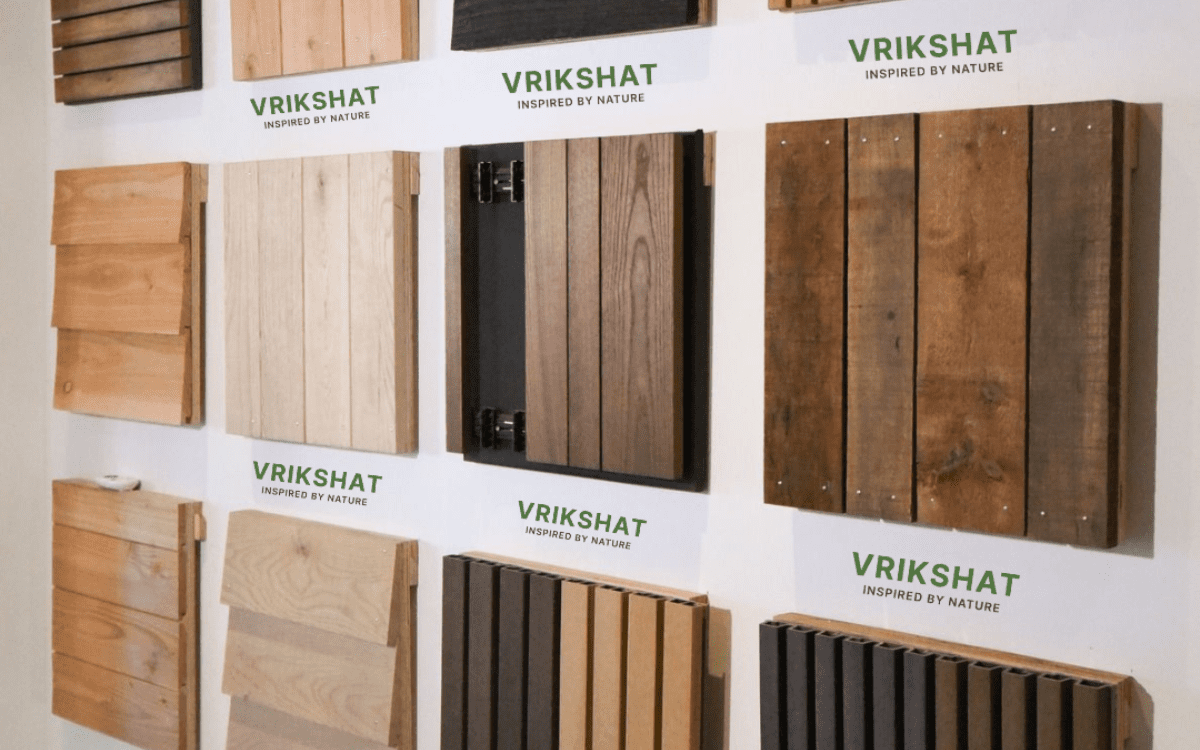
If you are looking for premium wood for indoor or outdoor use, Vrikshat is a name that will meet your expectations. Vrikshat works as one of India’s leading thermowood manufacturer, offering a wide range of wood options such as thermos ash, thermos oak, thermos pine, thermos frake, and thermos ayous etc.
Frequently Asked Questions (FAQs)
The best material for acoustic panels is wooden panels (Thermowood panels) because, compared to other materials, they offer multiple features at once sound absorption, natural diffusion, and humidity stability that no other single material can provide.
Acoustic panels are often used where you need to block unwanted noise — for example in a music studio or home theater where sound bounces off walls, ceilings, and floors, making audio unclear and uncomfortable. Acoustic panels are chosen to control the room’s sound by absorbing those sound waves so the audio can be heard clearly.
When we think about building a home theater, a common confusion is that acoustic panels and soundproofing are the same but they are different. Acoustic panels are installed to control the sound inside the room and improve its audio quality, while soundproofing is used to prevent sound from leaving the room so your home theater won’t disturb your neighbors.