
White Oak
The modern architect's hardwood. Closed-pore grain, cool olive-brown with grey undertones - the timber behind Dinesen floors, Reform kitchens, and the quiet maximalism of 2020s interiors.
Cool, modern, architecturally quiet
White Oak is the dominant hardwood of modern architectural interiors. Its cool olive-brown heart and tight closed-pore grain give walls a quiet, almost mineral calm – a character that reads modern rather than traditional, considered rather than warm, and holds its tone against light and time.
A closed-pore hardwood from the eastern United States, Quercus alba is the timber of French wine barrels, American whiskey casks, and ship decking – waterproof enough to hold liquid, hard enough to carry traffic. Supplied as solid boards for interior walls where closed grain and cool tone are the brief.
Verified timber characteristics
Species data: The Wood Database (Quercus alba). Figures are standard for the species at 12% moisture content.
Panel dimensions
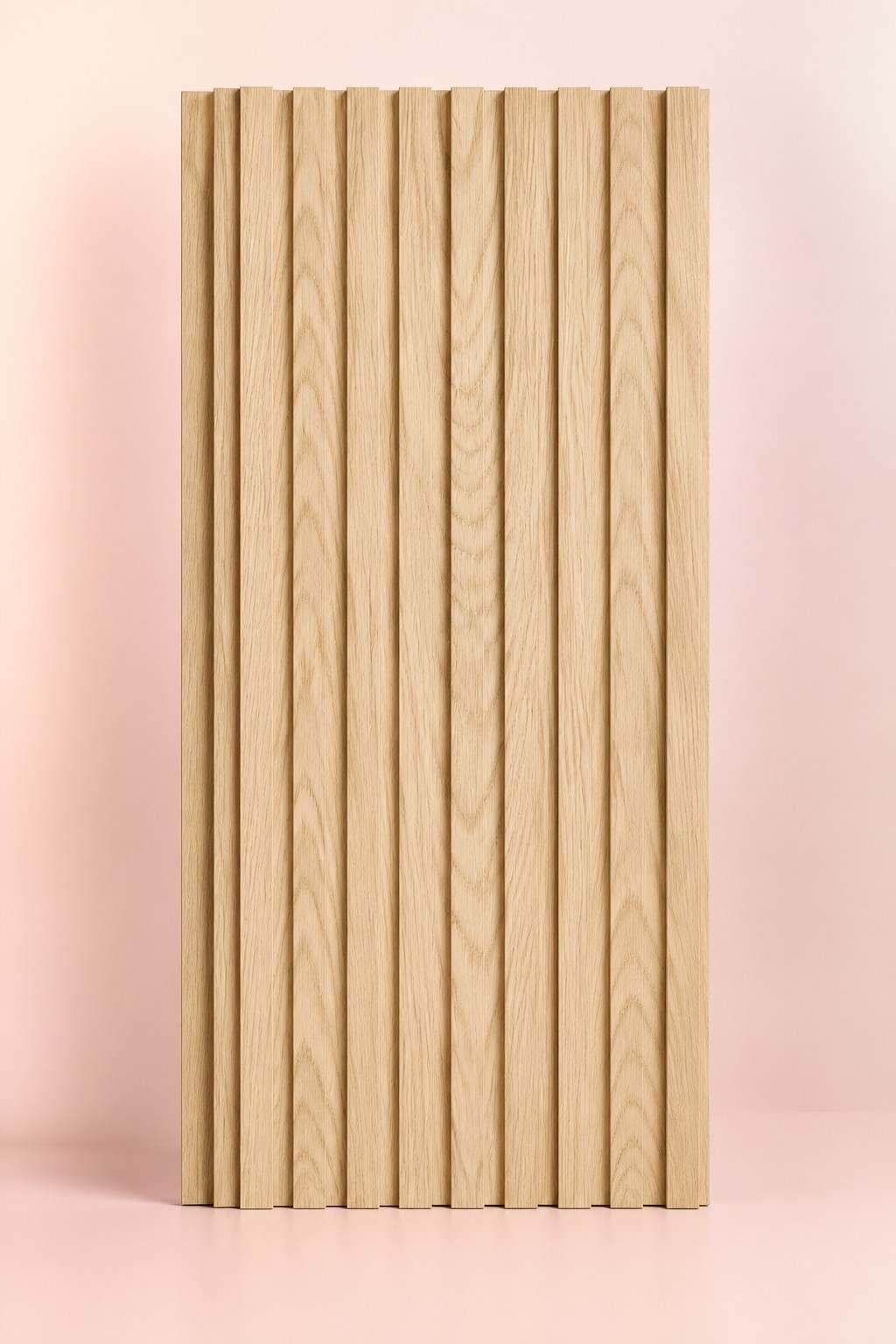
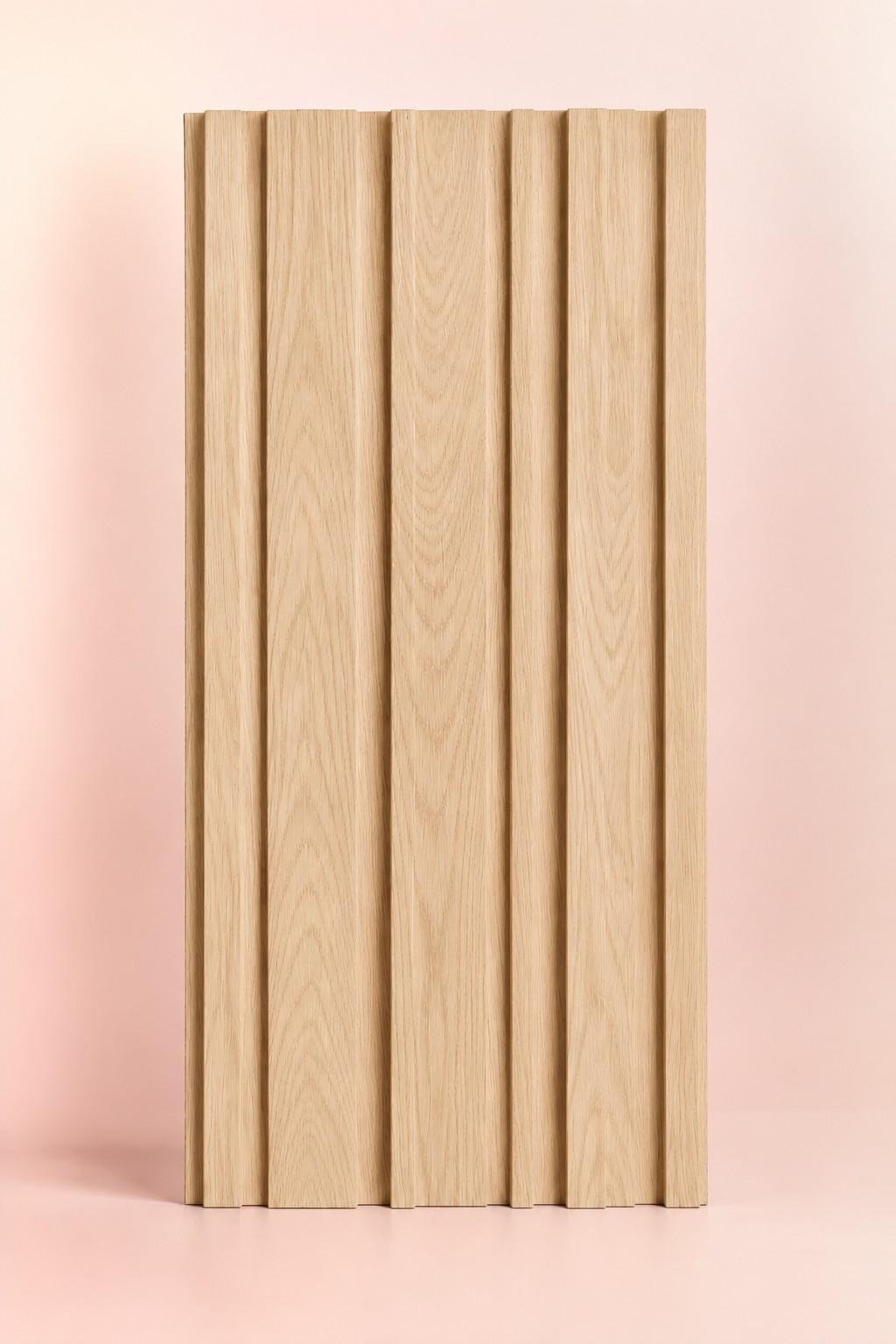
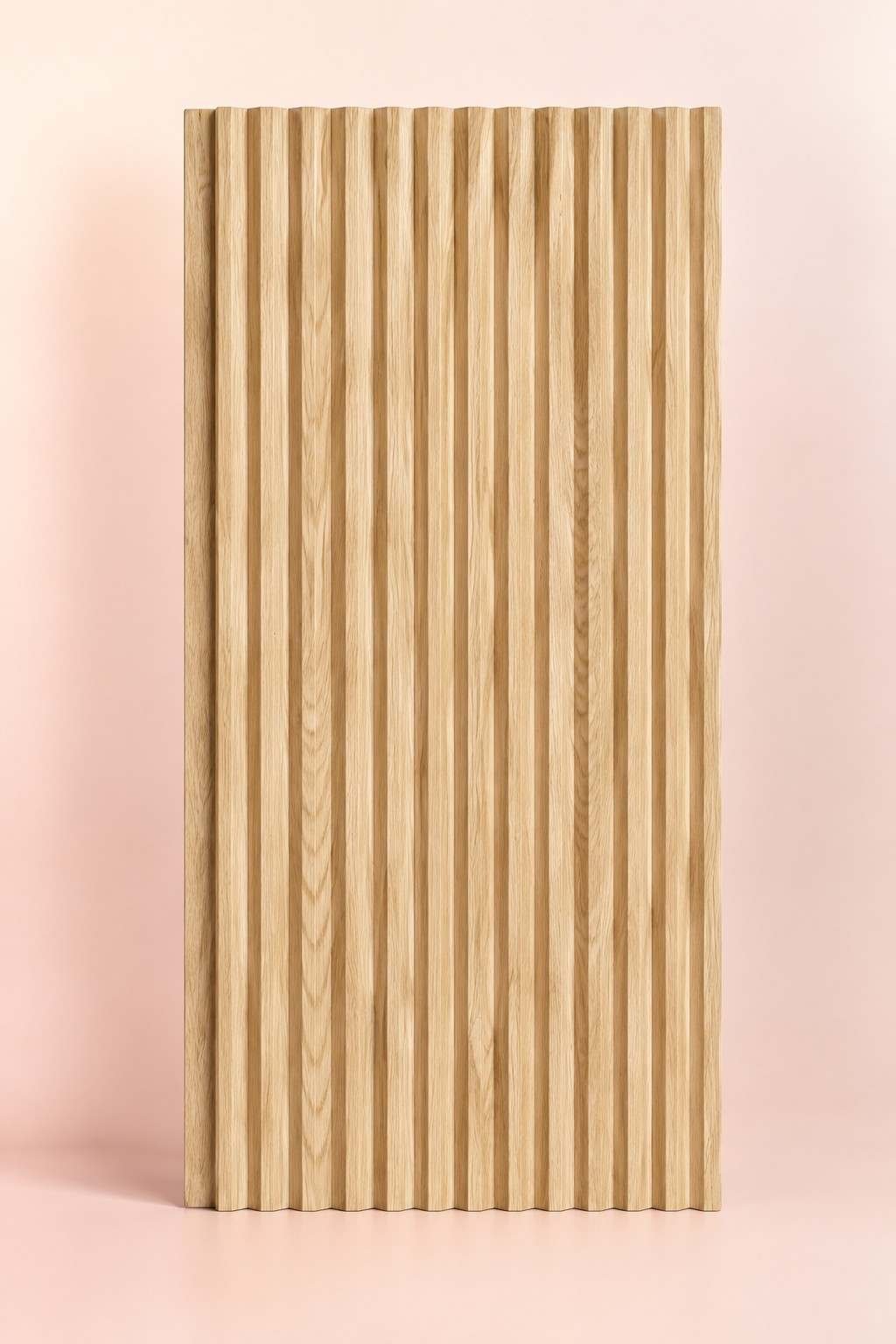
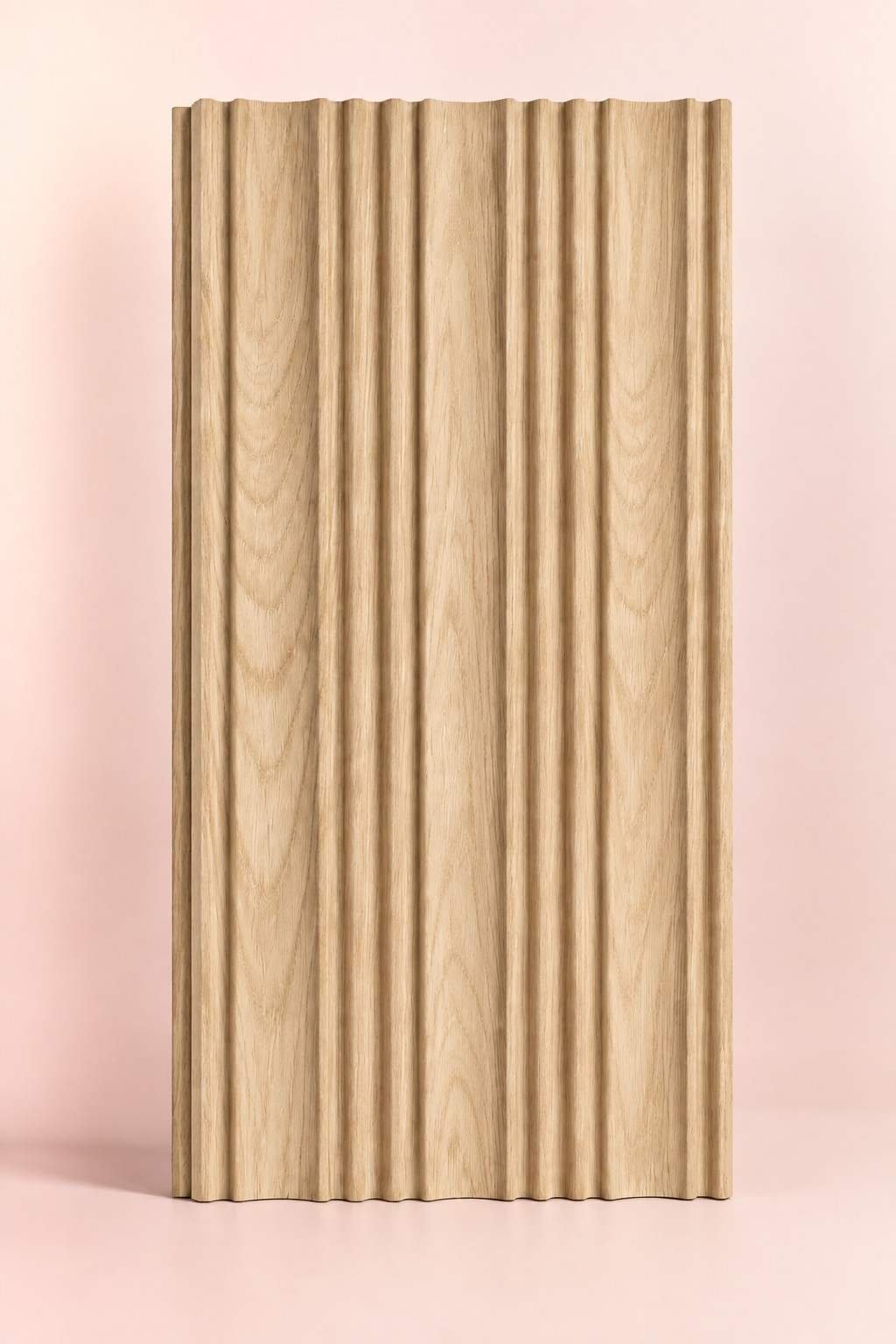
White Oak panel designs
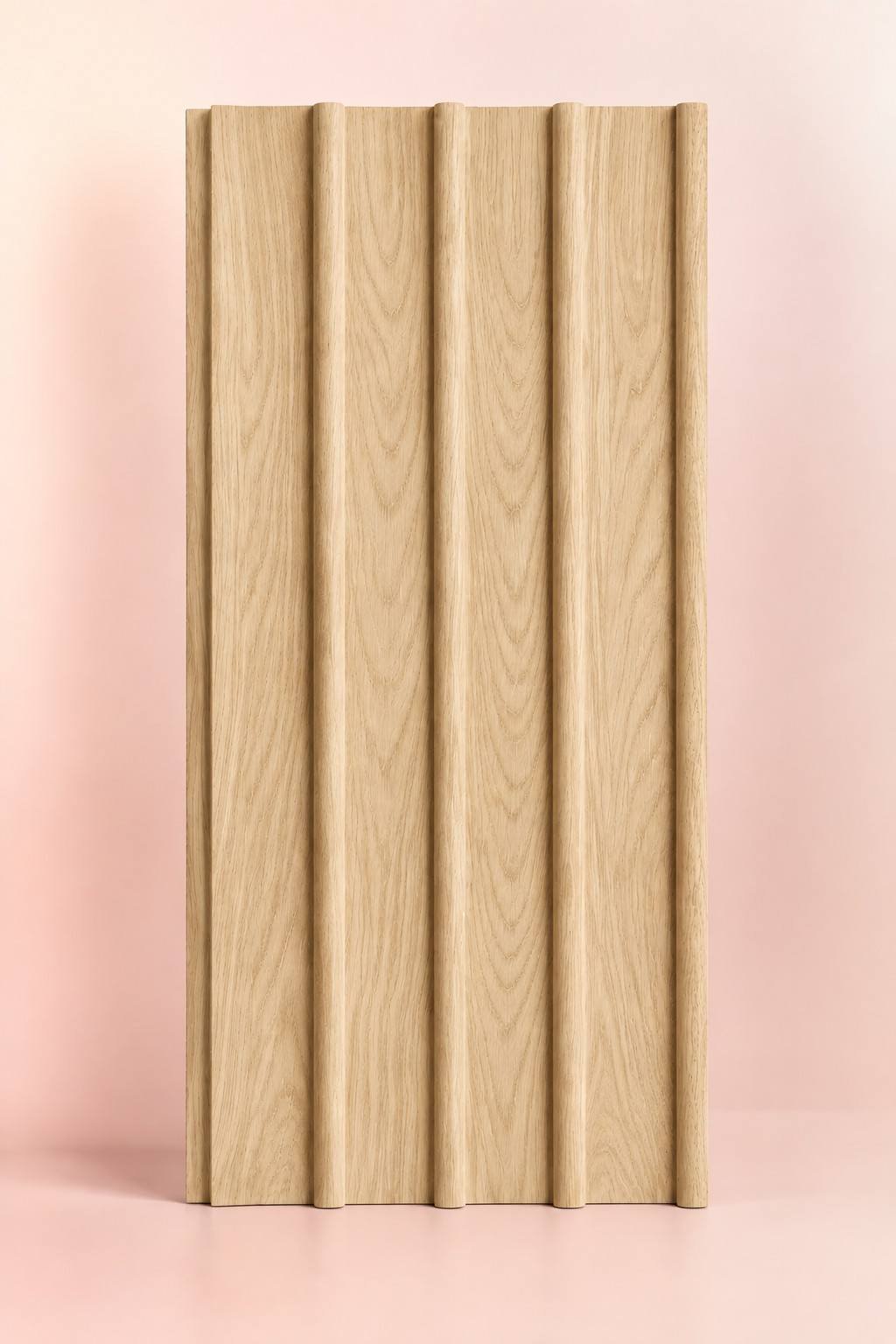
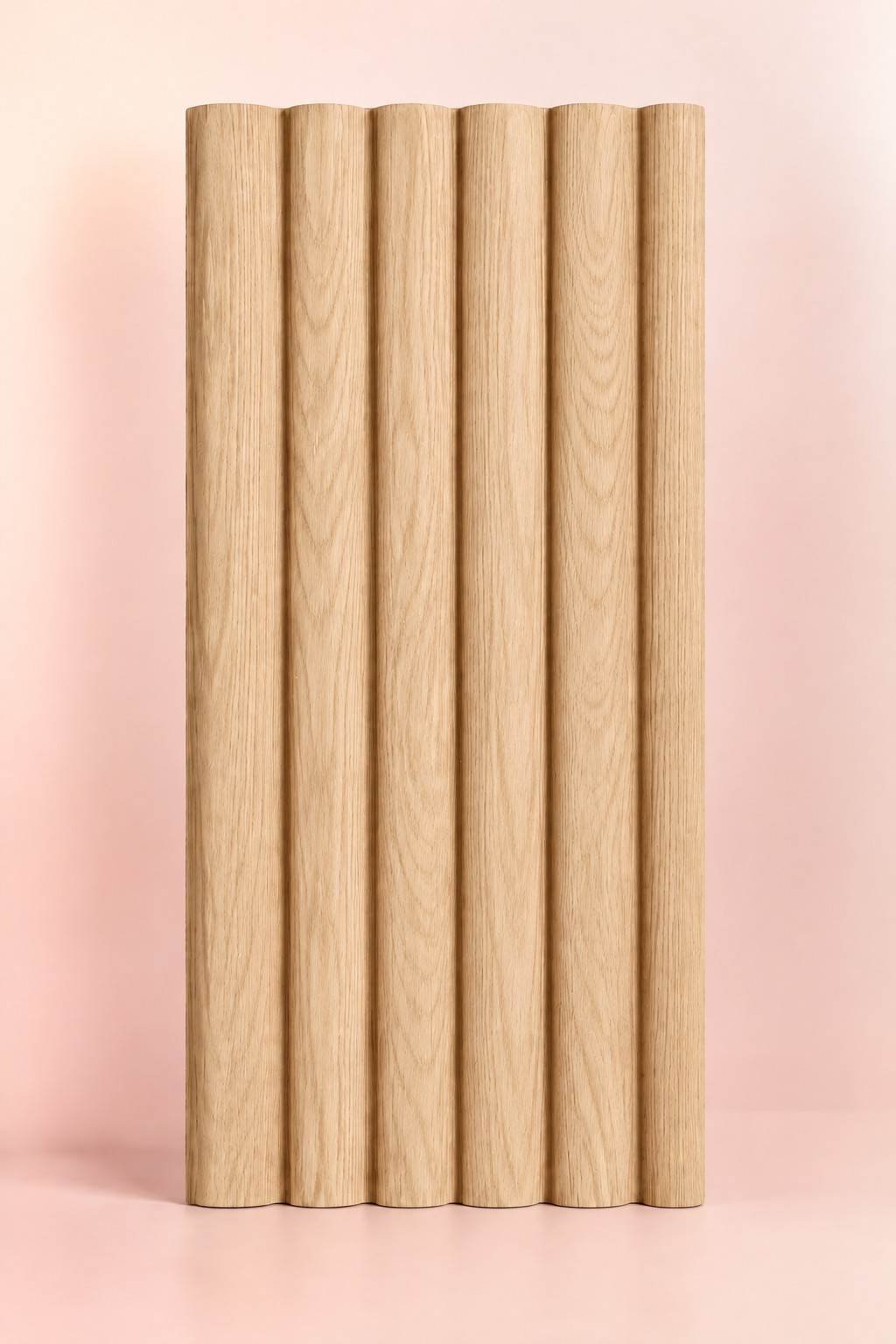
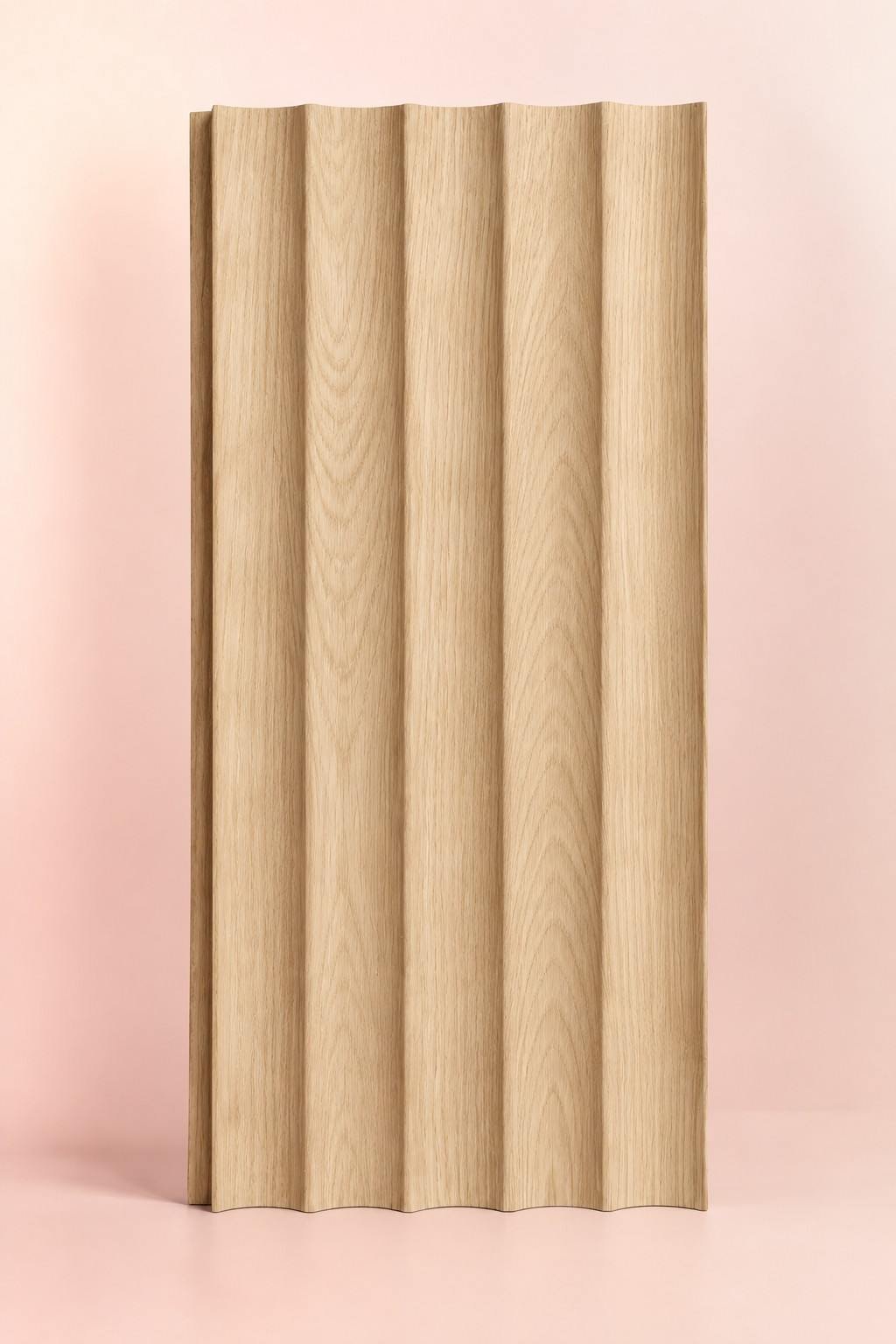
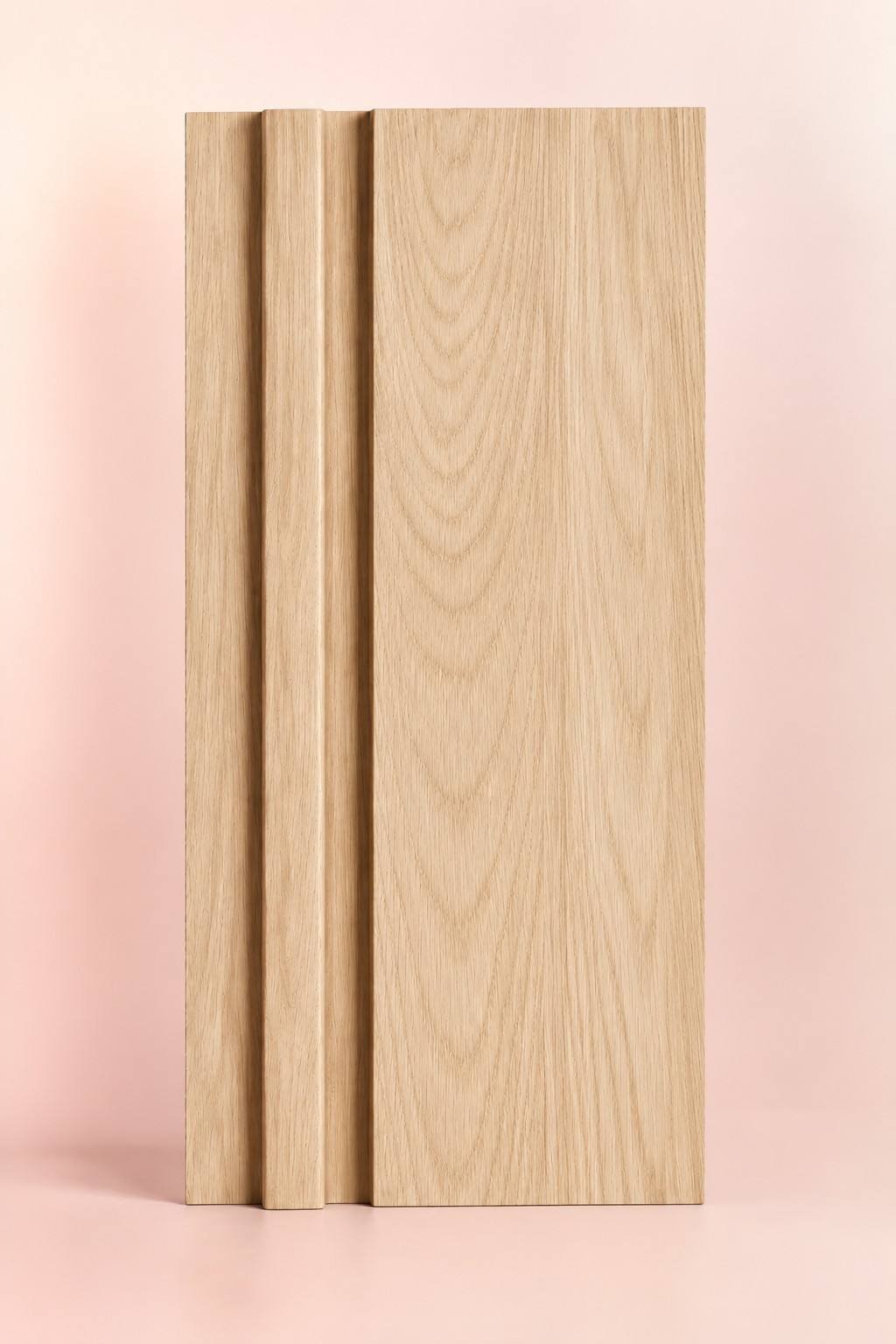
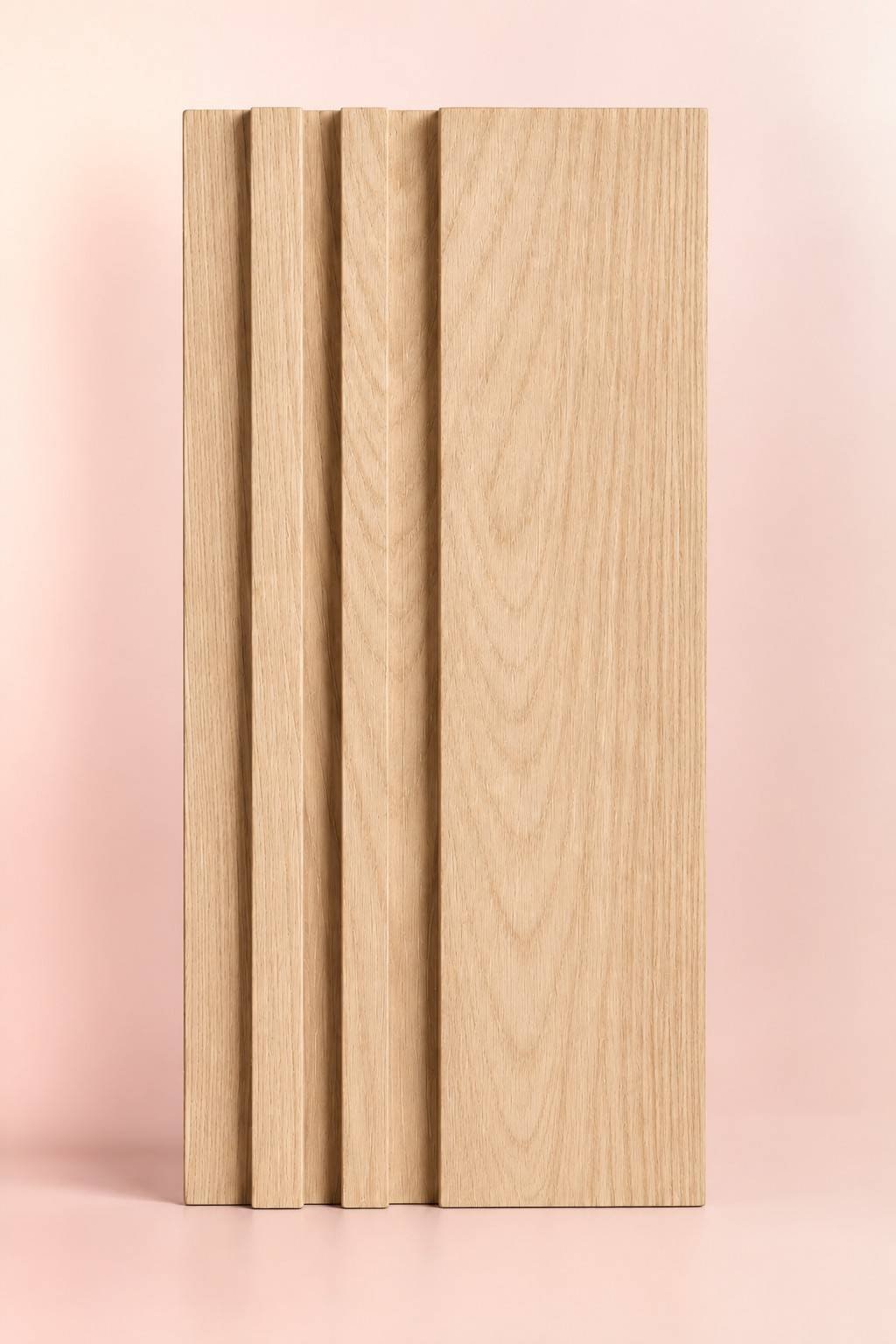
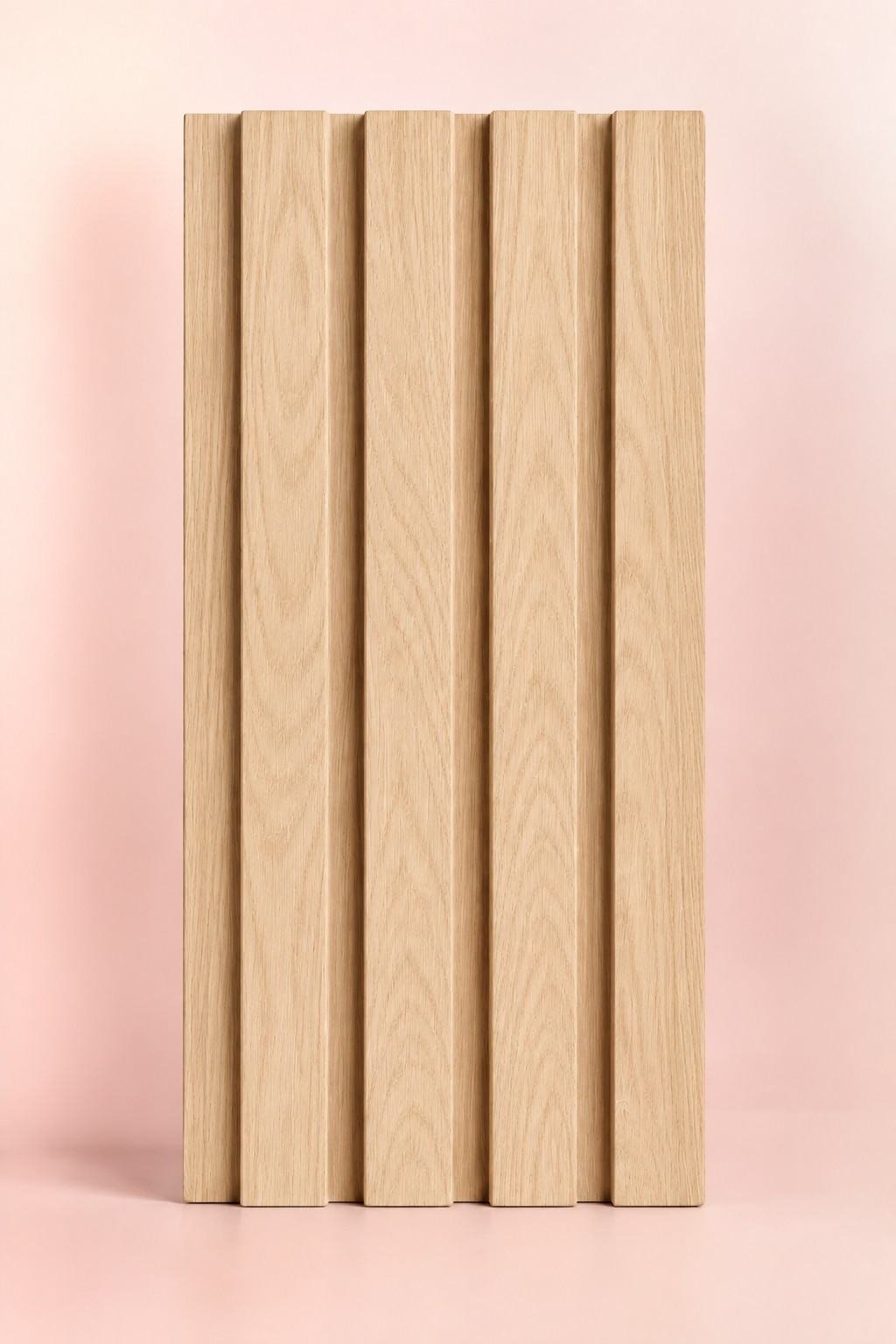
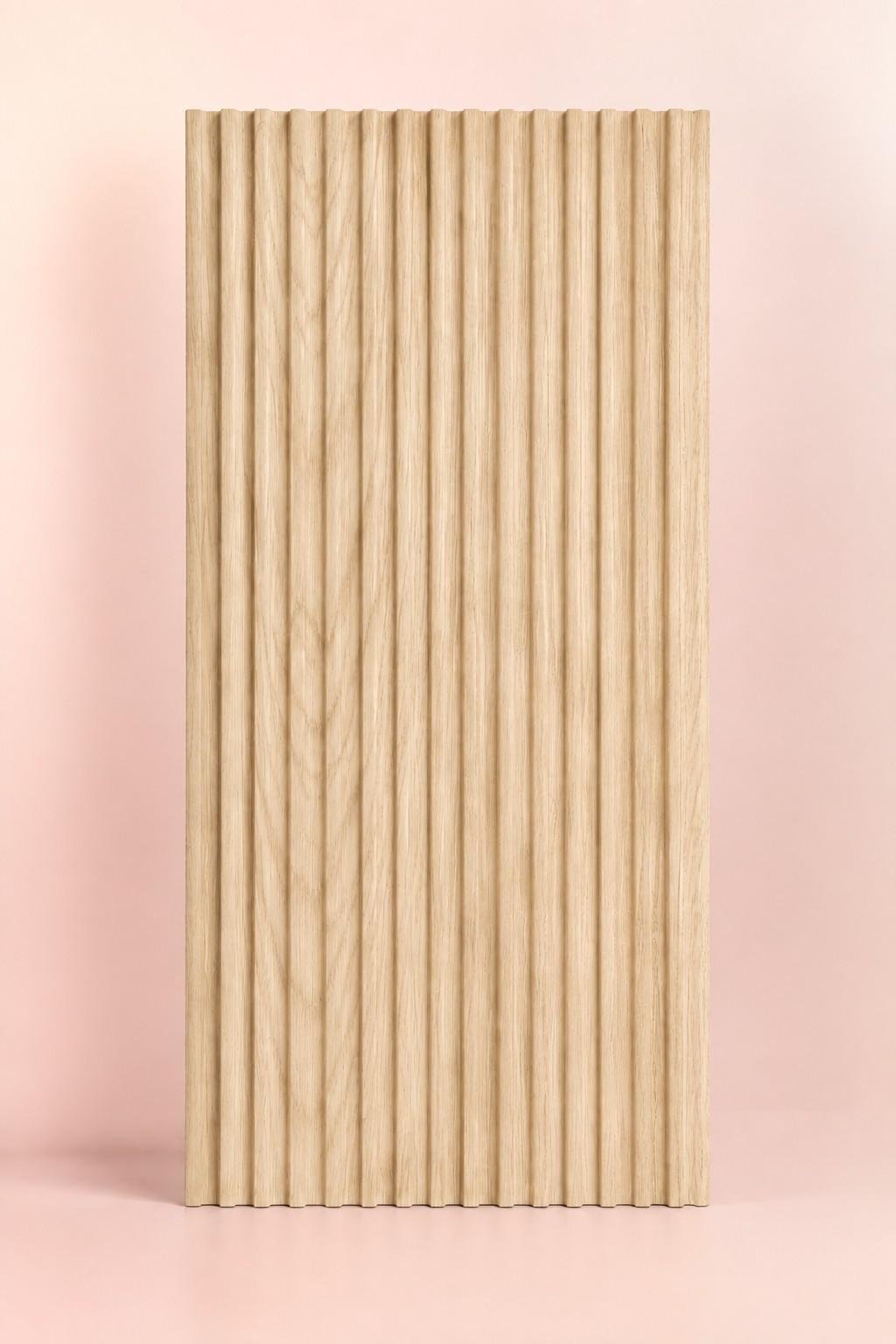
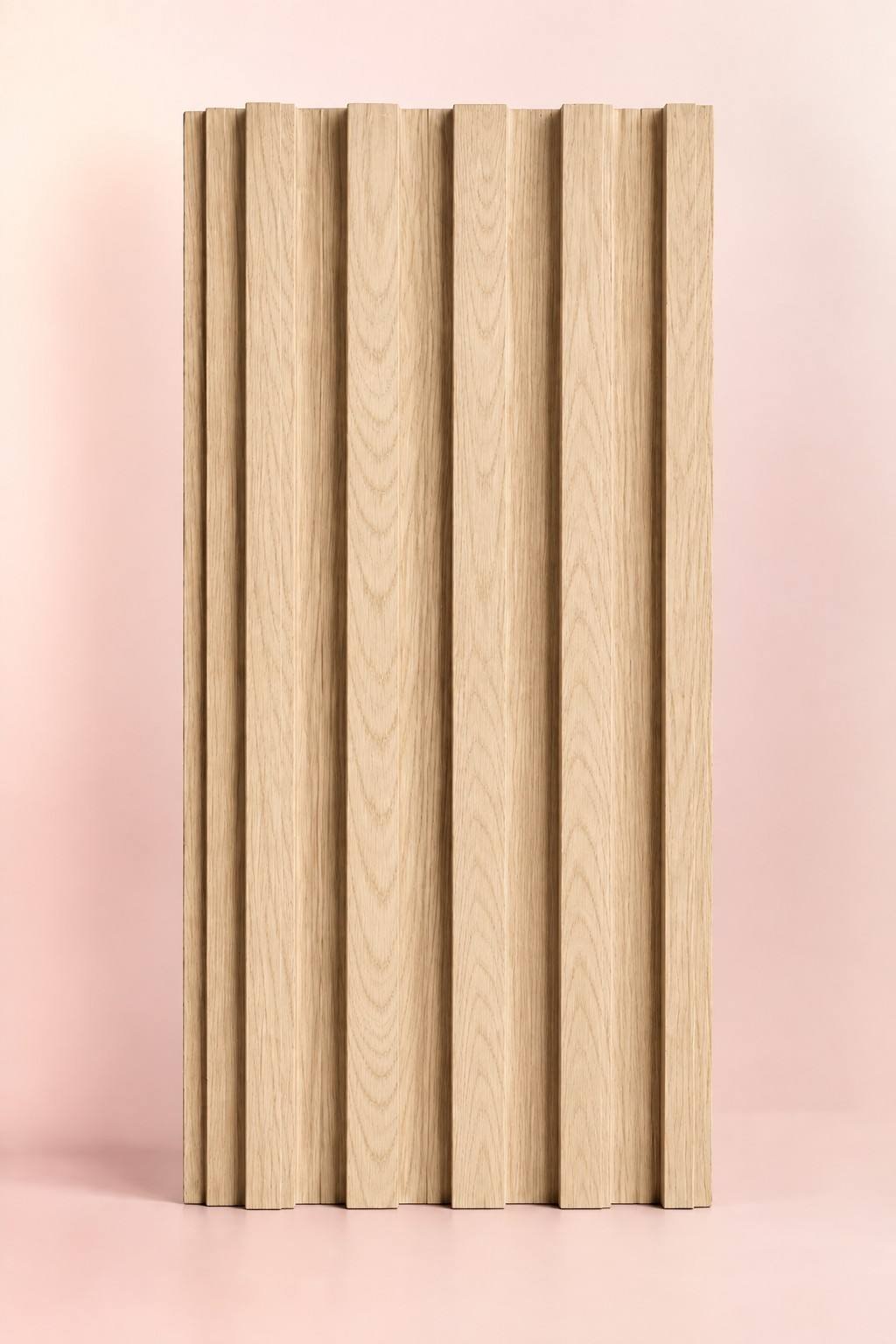
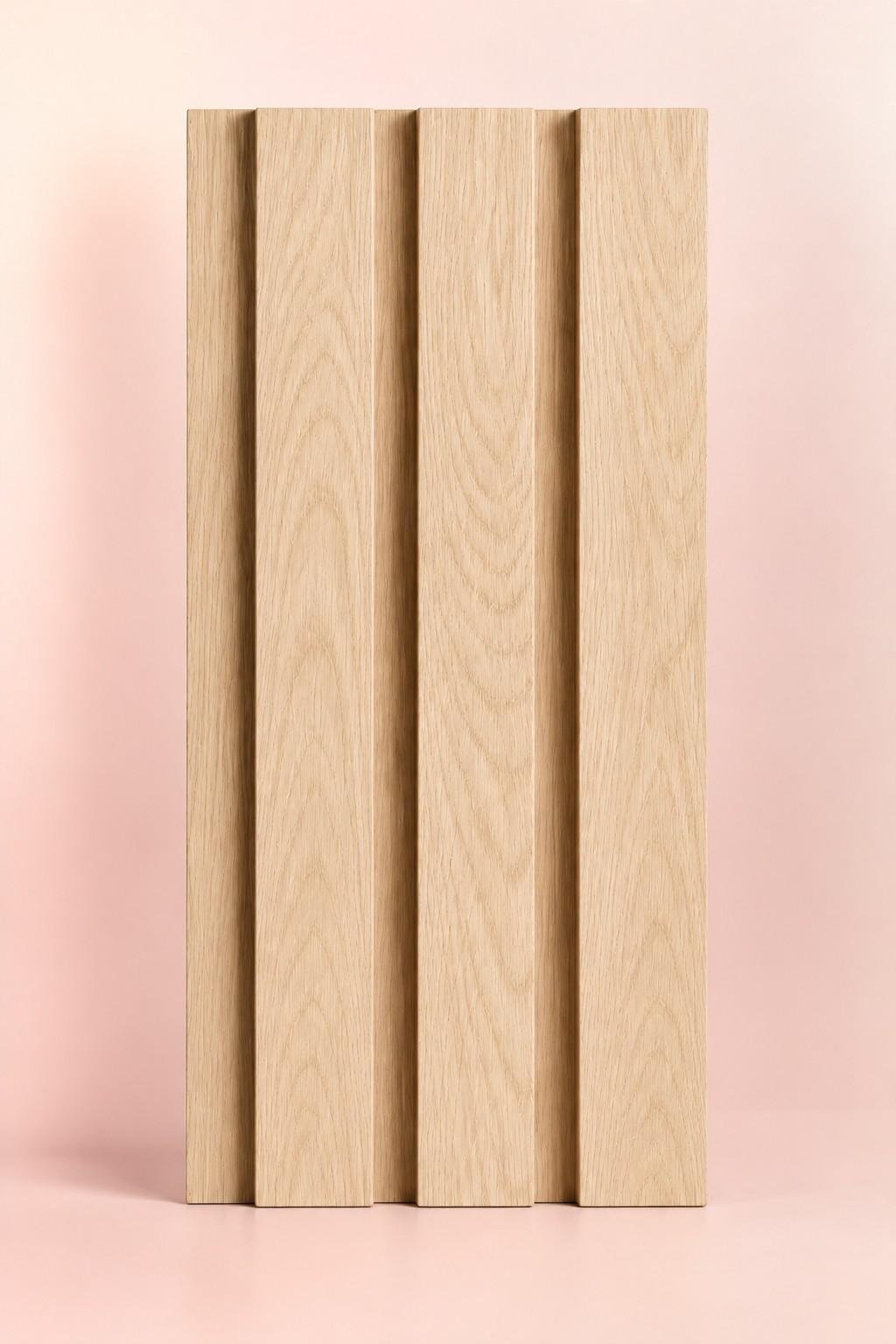
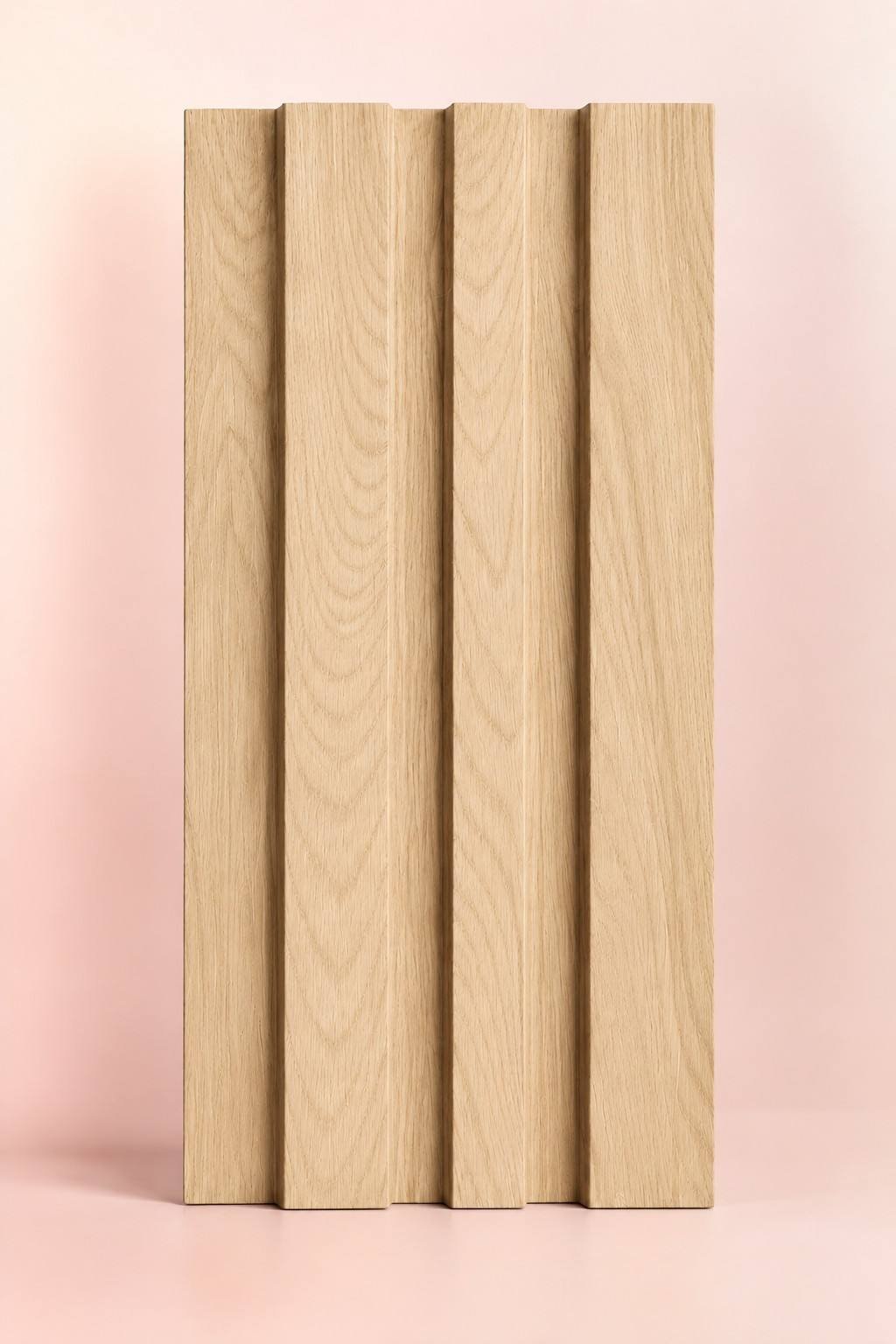
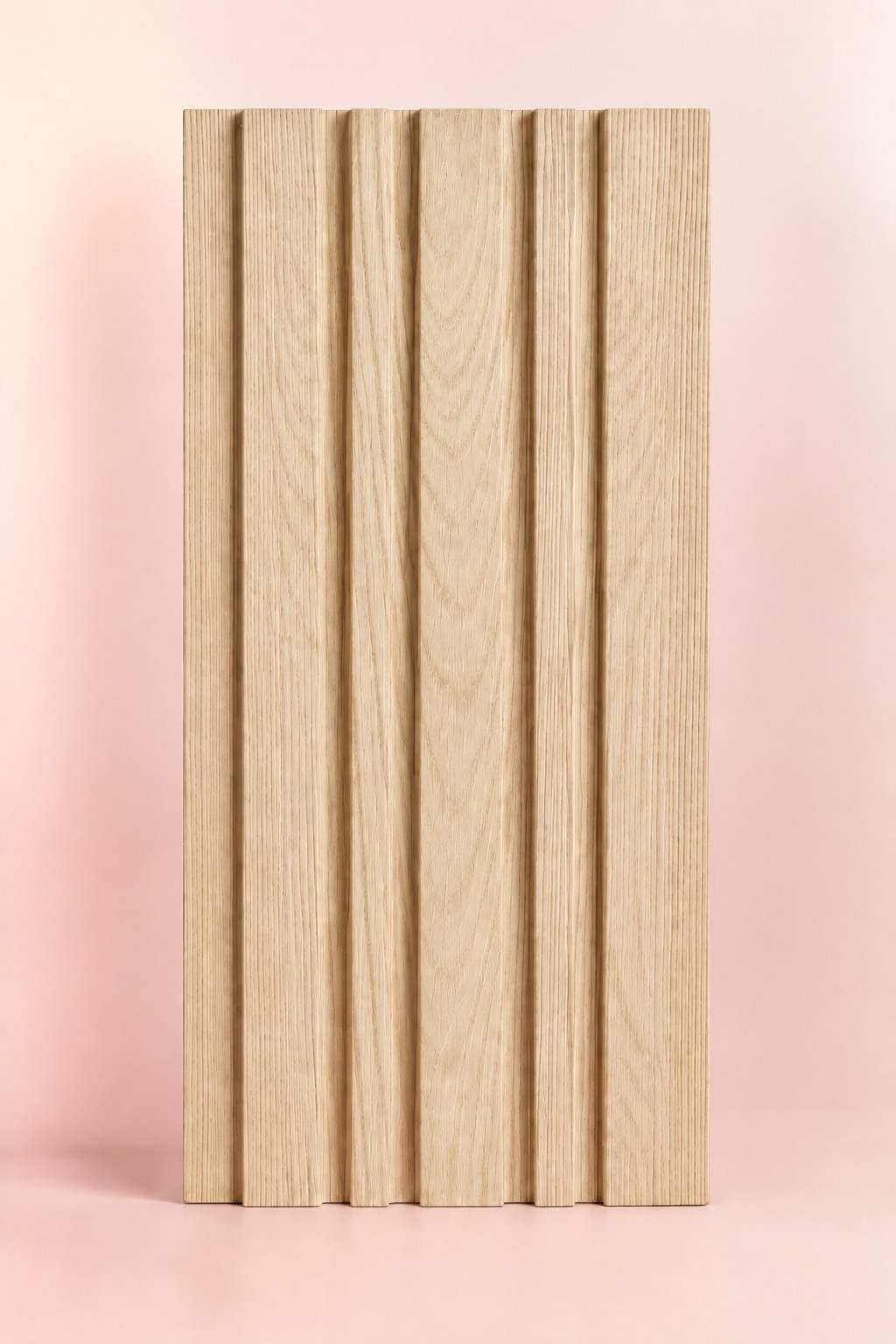
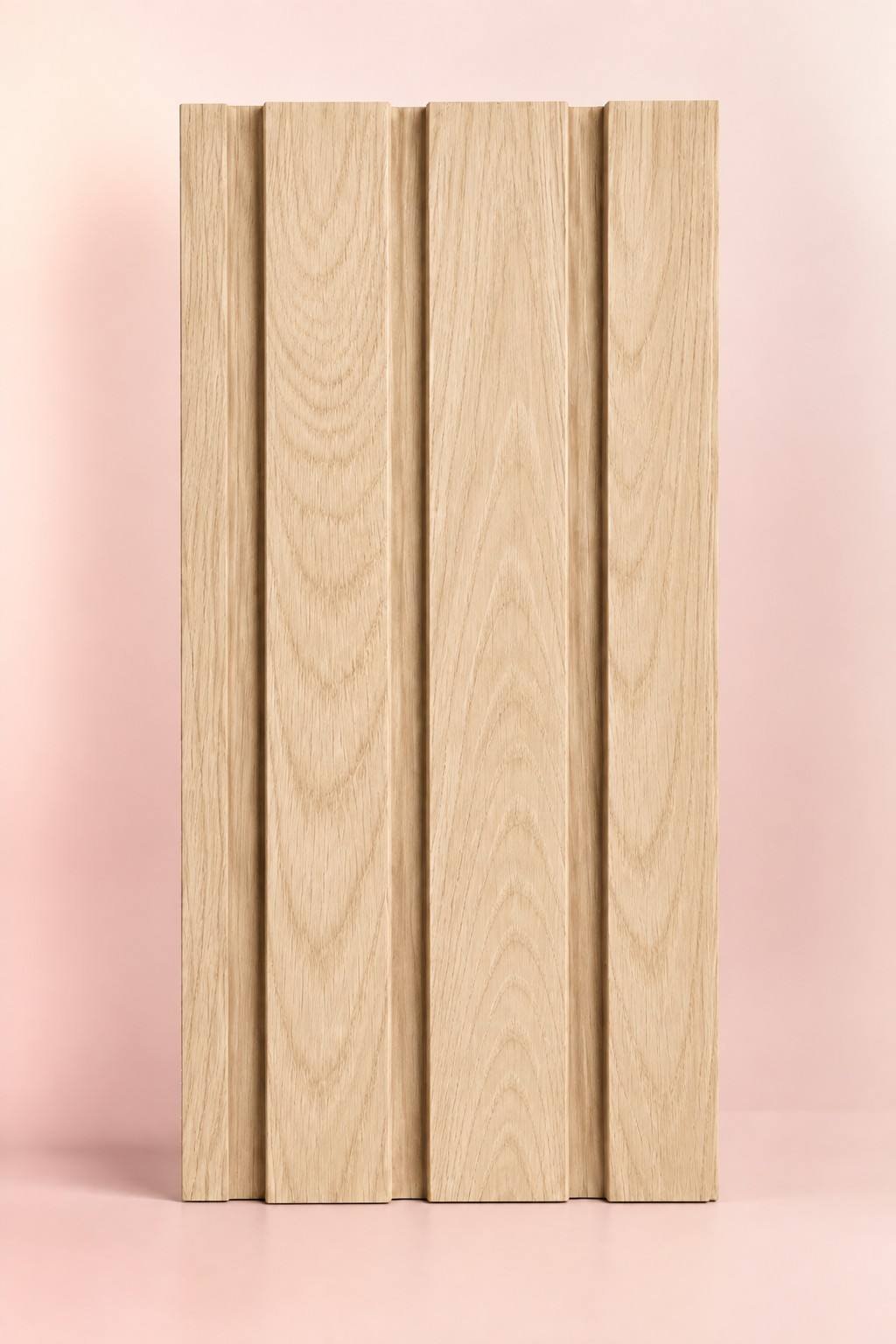
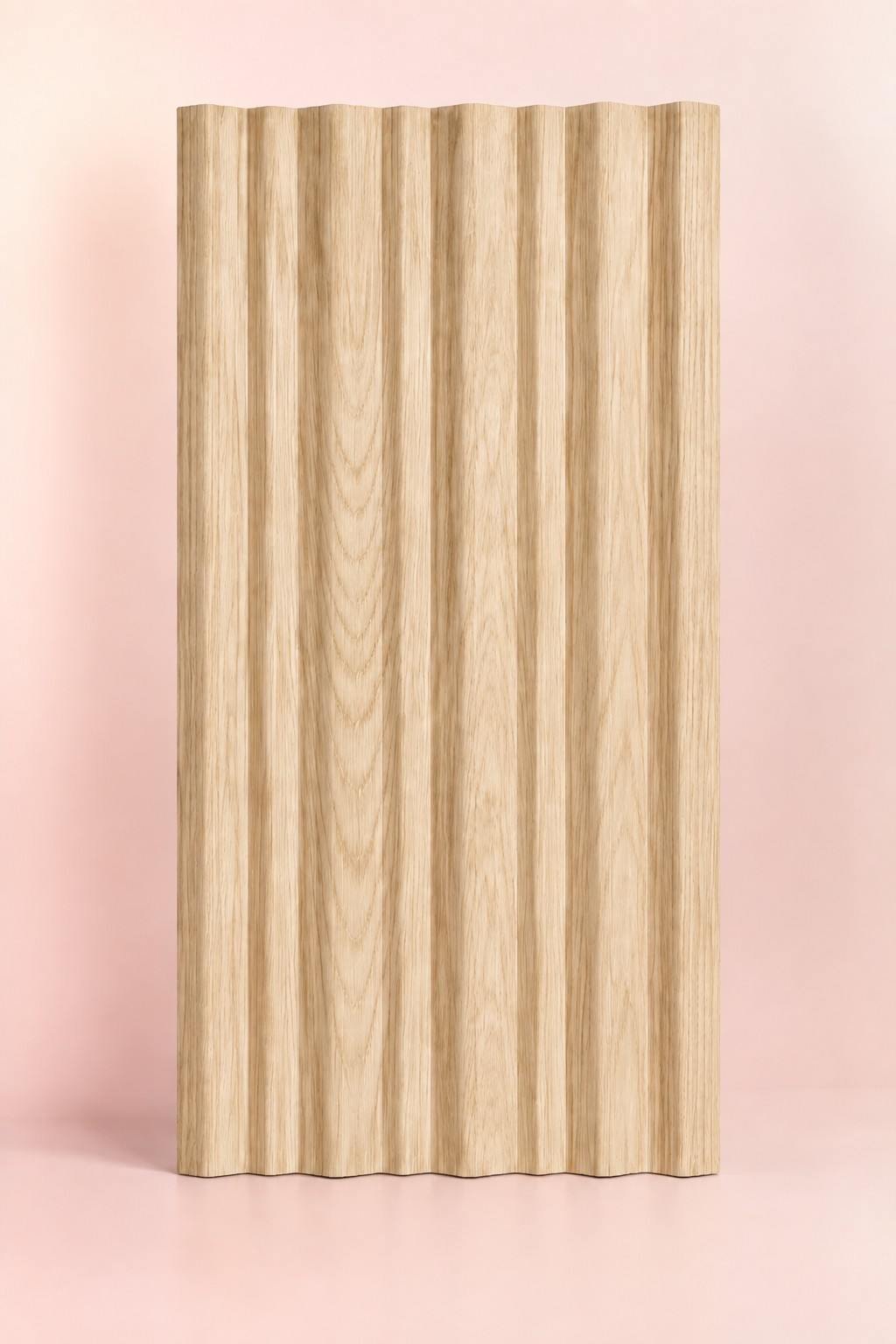
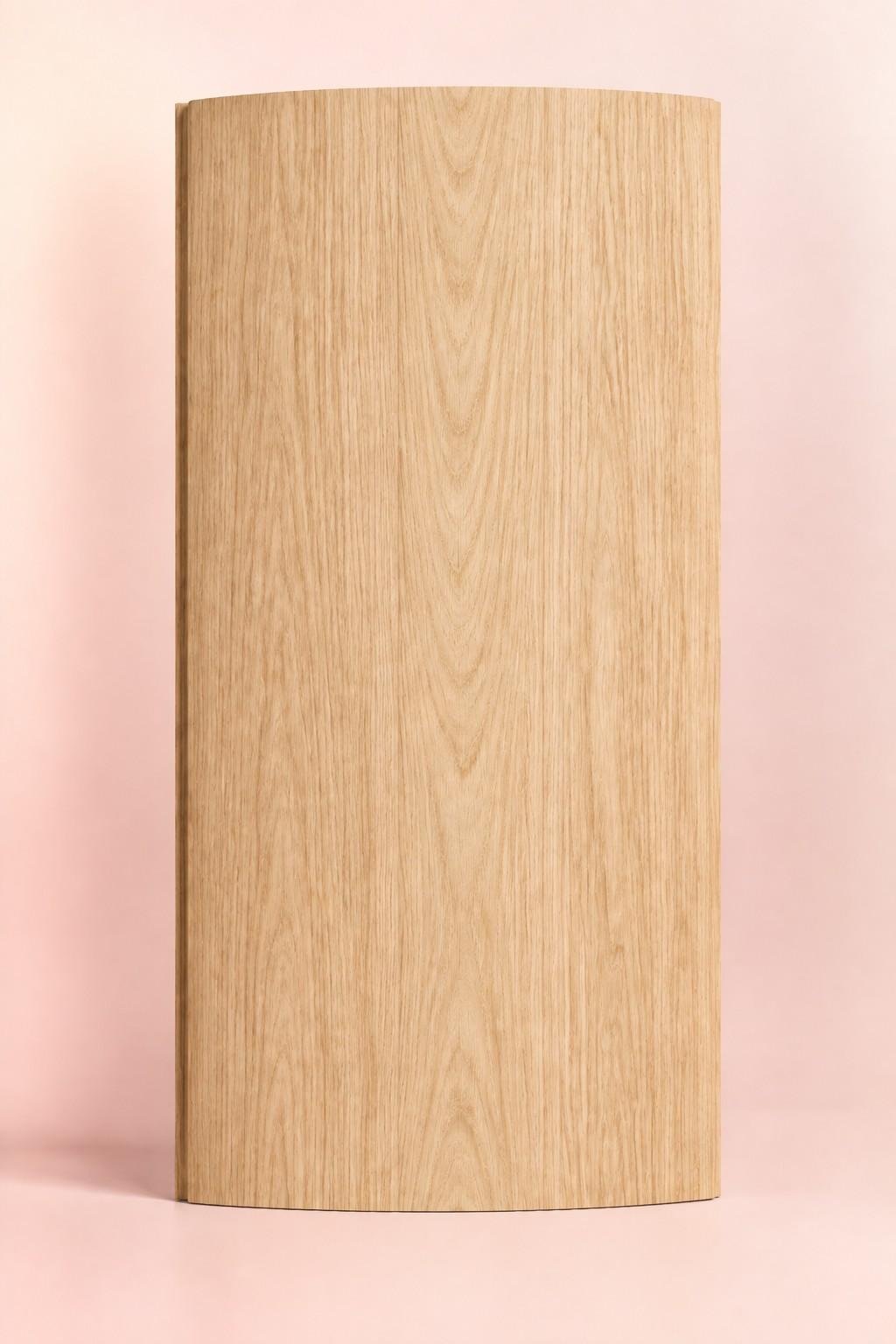
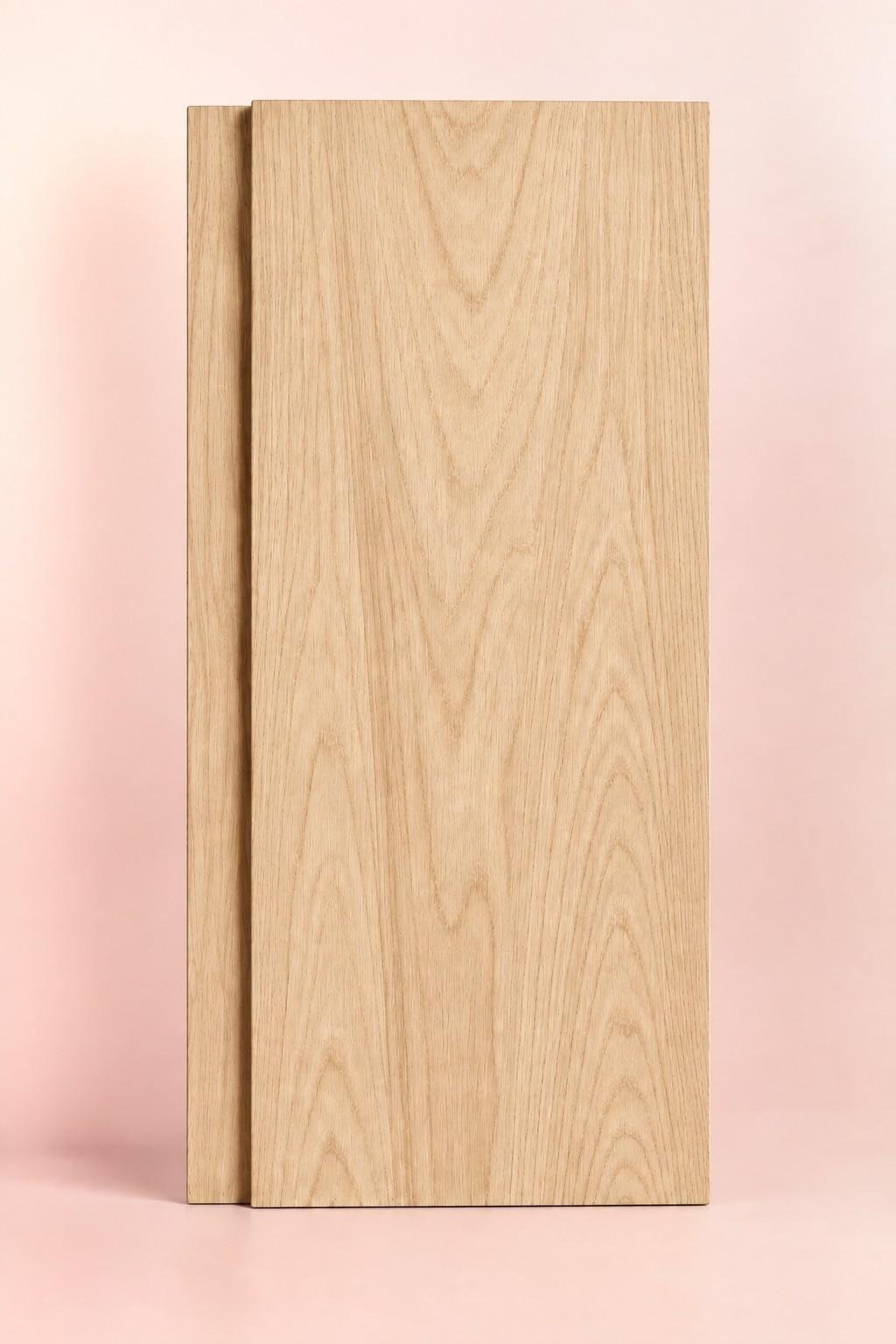
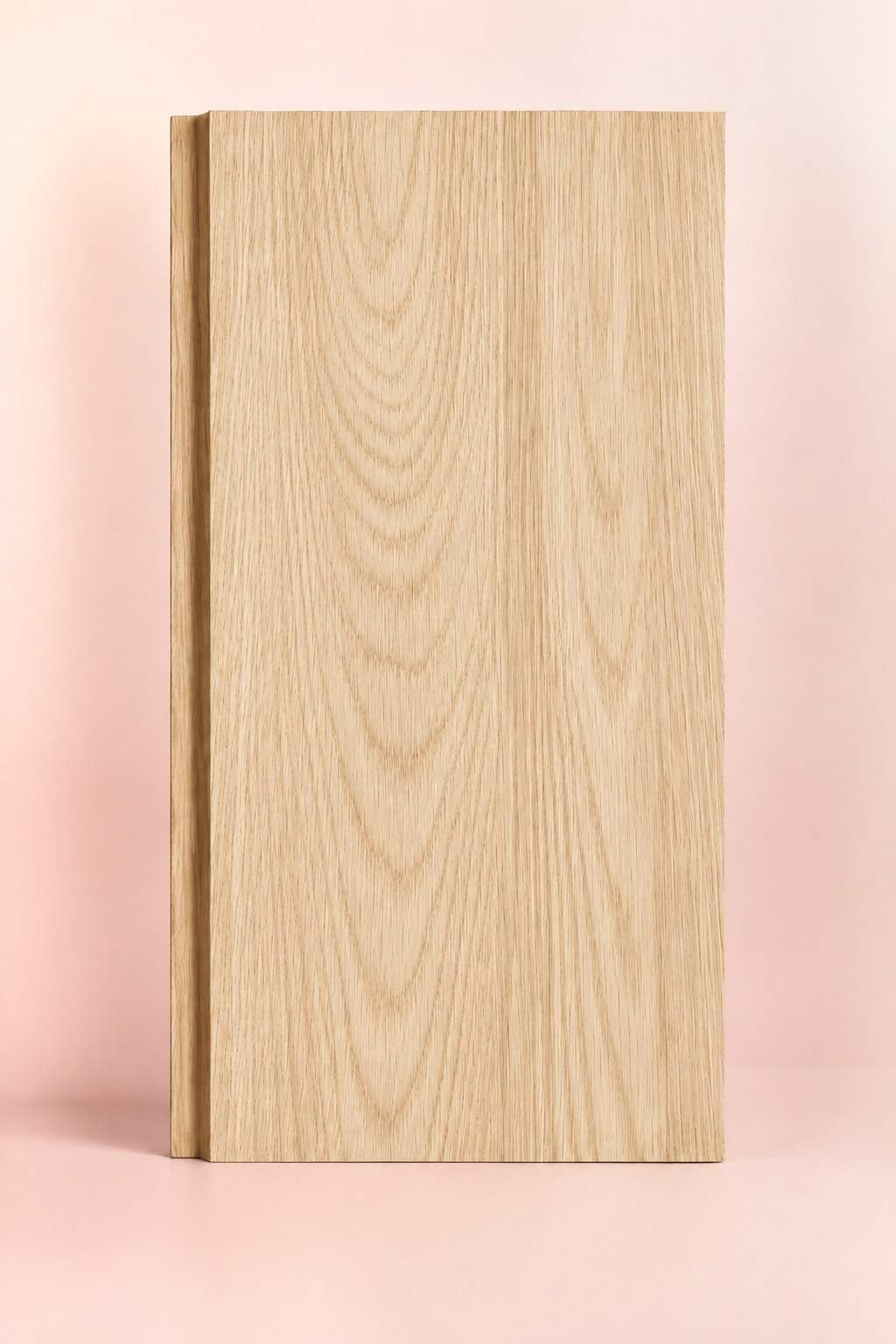
White Oak vs Red Oak
They look similar in a hardware store. They behave completely differently in a specification. If you are deciding between the two for interior walls, these are the differences that matter.
White Oak
Quercus alba
Pore structure
Closed-pore. Tyloses fill the vessels, making it waterproof enough for wine and whiskey barrels, boat decking, and marine joinery.
Colour
Cool olive-brown with grey undertones. The timber of modern Scandinavian and architectural interiors.
Grain reading
Tighter, straighter. Reads clean and architectural. Rift-sawn and quarter-sawn are the specifier's choice.
Janka hardness
1,350 lbf. Harder than Red Oak - dents less under heel traffic.
Best for
Modern interiors, feature walls, bathrooms (with sealant), wine cellars, and anywhere humidity is a factor.
Red Oak
Quercus rubra
Pore structure
Open-pore. Vessels are visible on the end-grain and absorb liquid - which is why Red Oak is never used for cooperage or marine work.
Colour
Warm reddish-brown with pink undertones. The timber of traditional American interiors and heritage joinery.
Grain reading
Wider, more active grain figuring. Plainsawn Red Oak has pronounced cathedral patterns - the classical American look.
Janka hardness
1,290 lbf. Slightly softer than White Oak.
Best for
Traditional and classical interiors, panelled rooms, feature walls where warmth and visible grain are the brief.
The short version: if the room reads modern, specify White Oak. If the room reads classical or heritage, specify Red Oak. If moisture is anywhere in the brief - a bathroom, a kitchen splash wall, a wine cellar - specify White Oak. For dry interior walls with a traditional palette, Red Oak costs less and brings the warmer reading.
Four finishes
Natural
The pale grain sealed to keep white oak’s light, airy tone.
Whitewashed
A soft white-wash for a bright, Nordic feel.
Stained
Tinted warmer or darker – white oak takes stain readily.
Painted
A smooth painted finish in any colour you choose.
Modern architectural interiors
- Modernist feature walls
- Boutique hotels & retail
- Wine cellars & bars
- Bathroom panelling (with sealant)
White Oak is a closed-pore hardwood – the only oak with tyloses blocking its vessels, which makes it waterproof enough for wine barrels and ship decking. In interiors, this means it handles humidity better than any other species we supply. That open-pore structure is exactly what gives it its grain character and makes it take stain and finish beautifully. For weather-exposed walls, ask us about thermally modified Thermowood.
Specify White Oak
Order free samples, request the datasheet, or talk to our team about matching tone and cut.