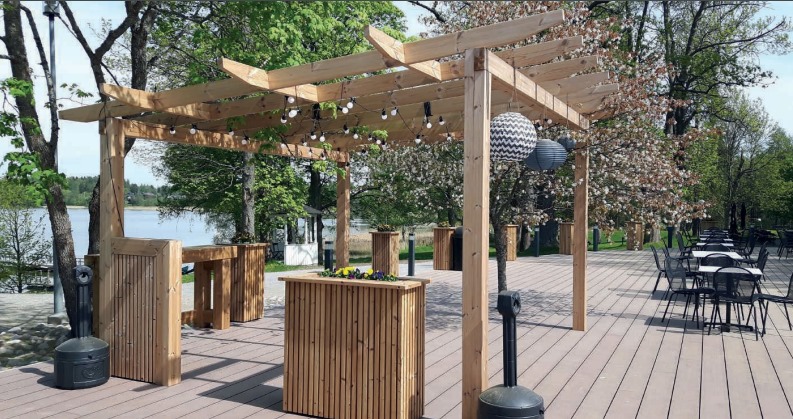
For exterior applications such as decking, cladding, fencing, and other architectural uses, wood gives our homes a natural and warm look. However, whether wood will perform well over the long term depends on how effectively it has been protected from rainwater, direct sunlight, and moisture.
Choosing only one coating is not enough to protect exterior wood. Water drainage, proper ventilation, selecting a protective wood finish, and correct installation all work together. If water continues to collect in wood joints or the wood surface does not get enough time to dry properly, moisture-related problems can occur even after applying a good coating.
Therefore, the best approach to protecting exterior wood is to choose the appropriate treatment according to the material and application, prevent water accumulation, and regularly inspect the condition of the surface. Exterior wood must be protected not only for its appearance but also for its strength and long-term durability.
In this guide, we will explore how different protective finishes work, how proper installation helps control moisture, and which practical steps can be followed to ensure long-term durability.
Understanding the Main Causes of Exterior Wood Deterioration
Exterior wood deterioration mainly occurs because of rainwater, moisture retention, sunlight, and biological organisms. According to technical guidance from the USDA Forest Products Laboratory and the Canadian Wood Council, a major principle of wood protection is to control moisture and design construction in a way that allows water to drain instead of accumulate.
The Effects of Rainwater and Direct Water Exposure
Rainwater plays one of the most important roles in exterior wood deterioration, especially when water collects on the wood surface, joints, cracks, and horizontal sections. The wood does not get enough time to dry, and as a result, it repeatedly absorbs and releases moisture, causing swelling and shrinking.
Another important factor is the point where water enters. Moisture can enter wood through cut ends, exposed end grain, fastener holes, joints, and damaged coatings. Therefore, simply applying a water-repellent finish is not enough to protect exterior wood proper installation and water drainage must also be considered.
UV Radiation and Surface Degradation
Direct sunlight can also degrade the wood surface. When direct sunlight falls on the wood, ultraviolet radiation breaks down the lignin. Lignin acts like a type of glue that holds wood fibres together. Because of this, the wood’s original colour first turns yellowish-brown, and then gradually turns grey as rain washes away the decomposed surface layer.
Therefore, when selecting a finish for exterior wood, it is not enough to consider only water resistance. If the wood is exposed to direct sunlight, the finish’s UV protection capability and outdoor durability should also be considered.
Moisture Retention and Repeated Wetting and Drying
Wood naturally absorbs and releases moisture, causing it to swell and shrink. Whenever wood becomes wet, it absorbs moisture and swells. When it dries, it shrinks. Repeated moisture changes can contribute to surface checking, movement in joints, and cracking or peeling in some finishes.
The problem becomes worse when the wood does not receive sufficient airflow to dry. Poorly designed joints, blocked drainage, soil contact, and persistently damp areas can retain moisture. At a practical level, we should create designs around the wood that allow rainwater to drain easily and give the wood proper airflow and an opportunity to dry. It is important not only to prevent moisture from remaining on the wood surface but also to allow any moisture that enters to dry properly.
Mould, Fungal Growth, and Wood Decay
Biological organisms that affect exterior wood include moulds, staining fungi, and wood-decay fungi. According to the USDA Forest Products Laboratory’s Wood Handbook, the growth of wood-degrading fungi depends on suitable moisture, favourable temperatures, the availability of oxygen, and a food source — which is the wood itself. Therefore, prolonged damp conditions are an important durability concern for outdoor wood.
However, not every fungal stain indicates structural decay. Staining fungi mainly affect the colour of the wood, while decay fungi break down the structural components and reduce its strength.
To understand exterior wood deterioration, it is useful to identify rainwater exposure, sunlight, moisture retention, and biological activity separately. We should understand these problems properly and then treat the wood accordingly.
Selecting Suitable Wood for Exterior Applications
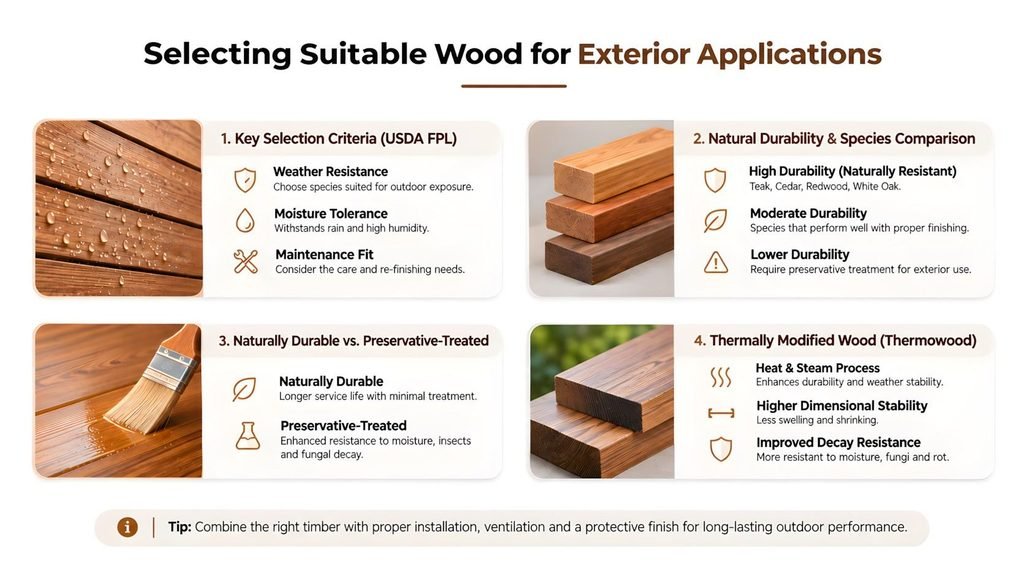
When selecting wood for exterior use, we should consider not only its appearance and cost but also its natural durability, intended use, moisture exposure, preservative treatment, and maintenance requirements. According to the USDA Forest Products Laboratory, combining a suitable wood species with an appropriate protection method can improve the service life of outdoor structures.
Natural Durability and Differences Between Wood Species
Every type of wood has its own natural ability to perform under different weather conditions. Some wood species are naturally weak, and if they are used outdoors without treatment, they may begin to rot within a few months.
On the other hand, specific wood species such as teak, cedar, and dense hardwoods contain natural extractives, oils, and tannins that work like protective agents and help protect the wood from insects and fungi.
Therefore, for exterior applications, we should always choose wood with high natural durability.
Also Read : Thermowood vs Traditional Wood Cladding: Which Is Better?
Naturally Durable Wood vs. Preservative-Treated Wood
Some wood species are naturally durable, meaning they have inherent properties that make them resistant to termites and decay. On the other hand, some softwoods, such as pine and spruce, are treated with chemical preservatives in factories.
Naturally durable wood does not require chemicals because its natural oils help protect it. However, it is important to understand that this natural durability exists only in the heartwood. The sapwood of all wood species, including teak and cedar, is not durable and can be attacked by decay fungi and insects if left untreated. In preservative-treated wood, chemicals are added through pressure treatment so that softwood can also resist decay and termites.
However, from an environmental perspective, natural and modern eco-friendly technologies are increasingly preferred over chemically treated wood.
Thermally Modified Wood for Outdoor Use
Thermally modified wood is treated with high temperatures and steam without using chemicals. In this process, heat and steam are applied together in a high-temperature chamber, reducing the wood’s tendency to react with moisture. This improves the wood’s dimensional stability, so it does not swell and shrink as much in changing weather conditions.
Thermowood becomes a suitable and long-lasting choice for exterior cladding, decking, and similar applications. However, the thermal modification process can reduce some mechanical strength properties, so it should be selected according to the application’s requirements.
Factors to Consider When Choosing Exterior Wood
When choosing wood for exterior use, several factors should be considered. First, determine whether the wood will be used in a covered outdoor area, exposed cladding, decking, or a ground-contact application.
Then compare natural durability, preservative-treatment requirements, moisture exposure, dimensional stability, local availability, installation details, and maintenance needs. Always choose authentic, solid natural wood or Thermowood, and avoid materials such as WPC or plastic panels if you want the premium and organic feel of real wood. At the same time, make a suitable exterior finish and proper drainage part of the planning process.
The best choice is the wood that meets the environmental conditions and performance requirements of the project — not necessarily the most expensive or naturally durable option.
Protecting Exterior Wood from Rain and Water Penetration
The biggest challenge in helping exterior wood perform well over the long term is protecting it from rain and water penetration. Wood is a hygroscopic material, meaning it absorbs ambient water and moisture according to weather conditions.
When water penetrates deeply into wood, it affects not only the surface but also the wood’s internal stability and strength. According to wood science and USDA Forest Products Laboratory guidelines, one of the first and most effective ways to protect wood from water is to use water-repellent treatments and penetrating oils. These treatments penetrate the microscopic pores and fibres of the wood and create a hydrophobic barrier. This prevents rainwater from penetrating deeply and allows it to run off the surface.
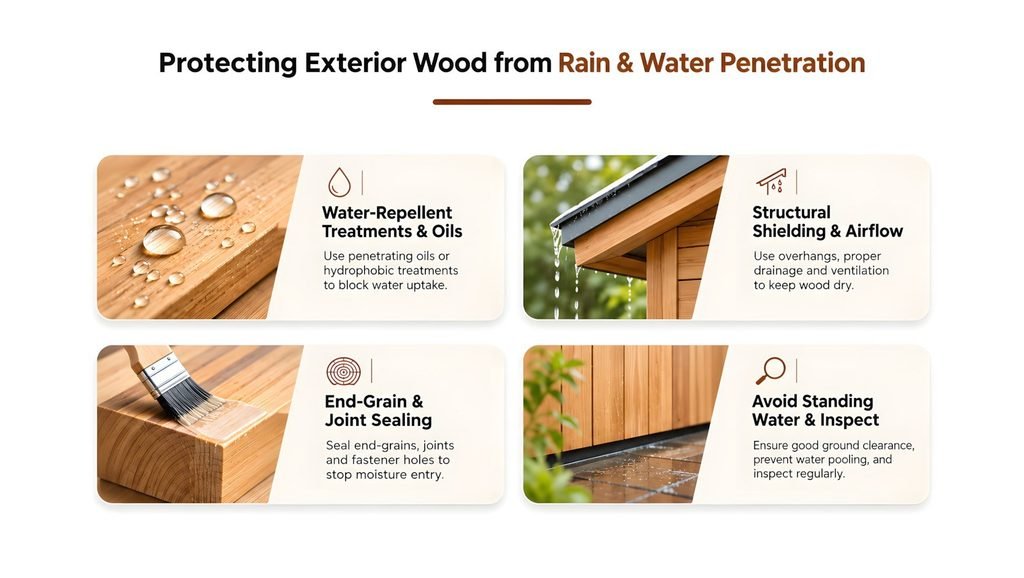
Wood protection should not depend only on a water-resistant coating. Roof overhangs, drip edges, suitable flashing, and properly designed joints help keep rainwater away from the wood. Exposed cut ends, joints, and fastener holes should also be carefully protected because they are potential entry points for moisture.
Wooden cladding and exterior wall systems benefit from adequate drainage and ventilation spaces so that water entering behind the cladding can drain away and the material can dry. In areas with high rain exposure, a rainscreen design can provide additional protection. End-grain sealing is especially important on cut edges and joints because end grain absorbs water like a sponge. When a water-repellent sealer or proper sealing method is used, moisture inside the wood can remain within a safe range and internal damage can be reduced.
Finally, wood should be protected from ground contact, standing water, and persistently wet surfaces. A suitable exterior finish can reduce water uptake. However, coatings can wear over time, so joints, drainage paths, and coatings should be inspected regularly.
Reducing Sun Damage and UV-Related Weathering
To protect exterior wood from sunlight, it is important to use strategies that reduce UV exposure and maintain a suitable protective finish on the wood surface.
According to the USDA Forest Products Laboratory, sunlight protection, moisture resistance, and long-term maintenance should all be considered when selecting exterior finishes. Pigmented finishes help protect wood from sunlight because pigmentation can absorb or reflect sunlight. Therefore, higher pigmentation can provide stronger protection from intense light. However, greater pigmentation may make the wood’s natural grain and colour less visible.
When choosing a finish, balance appearance and protection.
If you want to preserve the wood’s natural appearance and colour, you can consider a UV-resistant clear finish specifically designed for exterior wood. These products may contain UV absorbers or stabilizers, but transparent finishes cannot completely block sunlight, and their protection may decrease over time. Therefore, it is important to follow the product’s maintenance and recoating instructions.
Another way to reduce sun damage is to reduce direct exposure through architectural design. Roof overhangs, suitable shading, and well-planned placement can reduce direct sunlight and weather exposure on wooden surfaces. Wood should also not be left unnecessarily exposed to outdoor conditions for long periods, particularly before applying a finish, because weathering can affect coating adhesion.
Wood can be protected from sunlight through UV-resistant finishes, pigmented finishes, thoughtful design, and regular maintenance. No finish guarantees permanent protection from the sun. Regular maintenance, wood quality, and exposure conditions all affect how much damage can be reduced.
Moisture Management Through Proper Installation
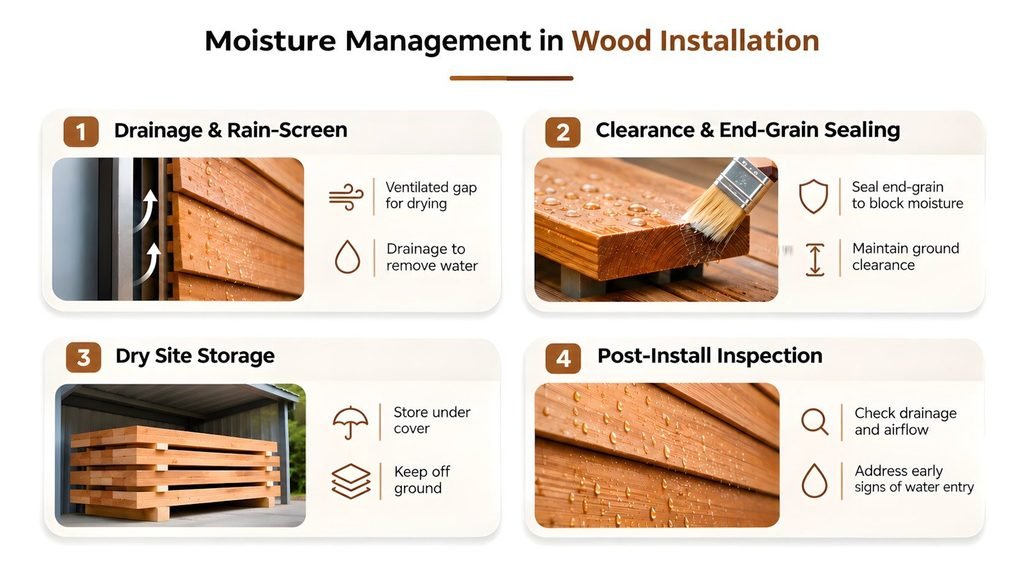
Proper installation is just as important for protecting exterior wood as using a suitable wood species and protective finish. According to technical guidance from the Canadian Wood Council, effective moisture management focuses on directing rainwater away from the building, draining water that enters accidentally, and giving materials an opportunity to dry. When installing wooden cladding and exterior structures, adequate drainage, airflow, and water-resistant detailing should be prioritized.
Providing a suitable drainage space behind cladding allows water to escape, while airflow can help with drying. In buildings exposed to heavy rain and wind, a properly designed rainscreen system can provide additional moisture protection. Technical details such as proper surface clearance and expansion gaps should also be considered during installation.
Wood should never be installed directly in contact with the ground. When wood is in contact with the ground, it absorbs moisture and begins to swell. End grain should be properly sealed because it absorbs water like an open sponge.
Before installation, wood should be stored in dry conditions. If wood absorbs excessive moisture during construction and does not receive enough time to dry, the risk of later swelling, shrinkage, and coating-related problems may increase.
After installation, it is also useful to keep drainage paths clear and inspect areas where water may become trapped.
Surface Preparation Before Applying Protective Treatments
Before applying protective oil, paint, or stain to exterior wood, the surface must be cleaned properly. If dust, algae, dirt, loose fibres, or old peeling coatings remain on the surface, the new finish will not bond properly and may not perform well.
According to Canadian Wood Council guidance, a clean, dry, and properly prepared surface is important for coating performance and adhesion. When a finish bonds to loose and damaged surface fibres instead of solid, healthy wood cells, it may peel quickly or lose its protective ability. Therefore, before starting any treatment, making the surface completely clean, sound, and stable is the first and most important step.
If the wood is fresh, sawdust can be removed after sanding. If the wood has already weathered, sanding can also remove defective fibres. Dirt and stubborn stains should be removed by sanding or gentle scrubbing. However, pressure cleaning should be used carefully because high pressure can damage wood fibres.
Before applying a protective layer, allow the wood to dry adequately. Applying a finish to wet wood can affect adhesion and drying. Moisture levels and suitable application conditions should be checked according to the manufacturer’s instructions.
If the wood has old paint or peeling coatings, they should be removed properly before applying a fresh coating.
Another important point is to protect the wood from unnecessary sun and rain exposure after preparation. Weathering can weaken coating adhesion, so once the surface is ready, it is better to apply the treatment under the recommended conditions. Proper cleaning, suitable sanding, sufficient drying, and timely application help the protective finish perform well.
Understanding Wood Preservatives and Protective Treatments
Exterior wood needs protection from rain, humidity, and changing weather conditions, so understanding its preservation and protective treatments is very important. The main goal is to extend the wood’s life by protecting it from fungal decay, insects, and other biological damage. According to the USDA Forest Service, the effectiveness of preservatives depends on the type of treatment, the wood’s penetration, and the amount of retained chemicals.
When we install wood in areas where moisture and biological attack pose a higher risk, a surface finish alone is not enough. In such cases, wood preservation is used treating the wood with chemicals that prevent organisms that damage the cellular structure such as decay fungi, mold, and wood-boring insects from thriving in the wood. These preservatives enhance the wood’s inherent durability and protect it from internal rot.
Understanding the difference between protective treatment and wood preservation is also important. Wood preservation involves chemical treatments that keep bacteria, fungi, and mold away from the wood. Surface treatments, on the other hand, protect the wood from weathering and UV rays. In modern wood protection, the best results come from a balanced combination of both. Either choose natural wood or thermowood that is inherently resistant to fungi, or properly treat the wood with a high-quality UV-blocking oil or a semi-transparent stain. When you apply these scientific approaches, not only does your exterior wood look premium, but it also remains protected and safe in the long term.
Exterior Wood Maintenance: Inspection, Cleaning and Refinishing
To maintain the durability of exterior wood, regular inspections, gentle cleaning, and occasional refinishing are important because protective coatings can gradually wear down due to exposure to rain, sunlight, and the environment. According to wood science and the guidelines of the USDA Forest Products Laboratory (FPL), the most important and first step is periodic inspection—i.e., regularly checking the wood’s condition.
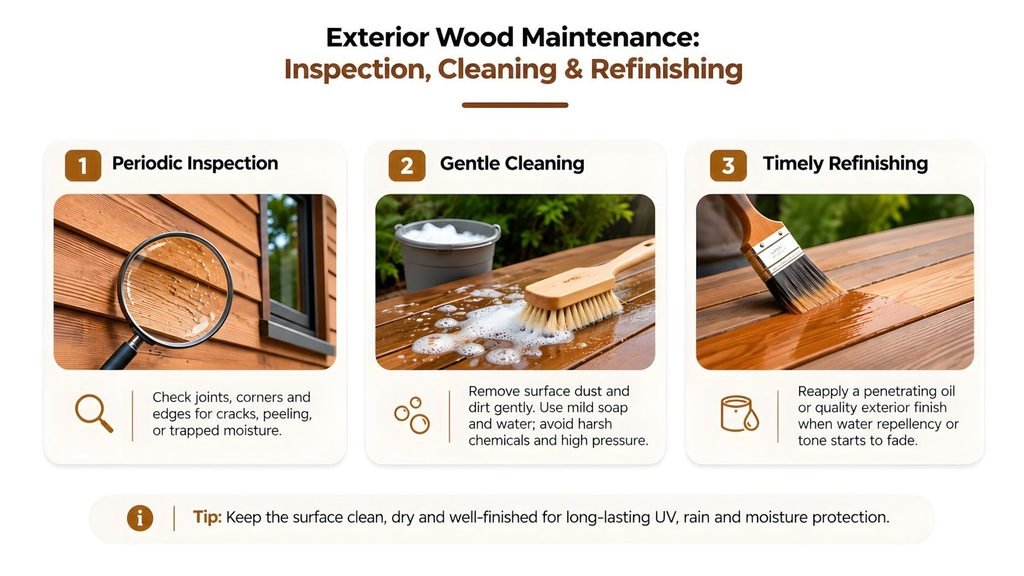
- Inspection: Regularly check the wood surface, including the joints, corners, exposed edges, and areas where water can collect. Look for minor cracks, peeling, or moisture spots on the wood surface, and check whether the finish has faded due to water accumulation. If the wood is becoming soft or shows signs of decay, address the underlying moisture problem rather than simply applying a new coat of finish.
- Cleaning: After inspection, an important step is to clean the wood surface. Over time, dust, pollution, and dirt accumulate on the wood, causing it to absorb moisture. During cleaning, avoid using any harsh chemicals or high-pressure water, as these can damage the wood’s soft fibers. Use strong chemical cleaners only according to suitable products and the manufacturer’s safety instructions.
- Refinishing: The final step in maintenance is timely refinishing. As time passes, exposure to rain and sunlight causes the protective oil or stain layer that was applied to lose its effectiveness. When you notice the wood surface starting to repel water or the original warm tone fading, you should apply a new coat of penetrating wood oil or pigmented stain. This re-coating nourishes the wood’s pores again, preserves its natural color, and provides full protection from UV rays and moisture for the future. Regular inspection, proper cleaning, and renewing the protective finish at the right time help reduce moisture-related damage and maintain the wood’s appearance. Maintenance intervals are not fixed; they depend on the product type, climate, sunlight, rainfall, and surface exposure.
Protect Exterior Wood with VRIKSHAT Wood Oil
VRIKSHAT Wood Oil is an effective solution to protect exterior wood from rain, sunlight, and moisture. Its rainproof, waterproof, and UV-resistant properties shield wooden surfaces from rain, water, and harmful UV rays. At the same time, it enhances the wood’s natural color and appearance, preserving the natural beauty of the wooden surface. With proper application and regular maintenance, VRIKSHAT Wood Oil can also enhance the appearance and beauty of exterior wood.
Common Mistakes in Exterior Wood Protection
There are several common mistakes that reduce the durability of exterior wood, even if the wood quality is high and a protective finish is used. According to research from the USDA Forest Service, moisture accumulation, improper surface preparation, and weather exposure can increase the risk of coating failure, warping, and wood deterioration. Here are some frequent mistakes to avoid:
- Applying a protective finish to damp, dirty, or weathered wood can reduce adhesion and performance. Always properly clean the surface and allow it to dry according to product instructions before applying the coating.
- Relying only on stain, oil, or paint is a mistake. If water becomes trapped at wood edges, joints, or behind the coating, moisture-related problems can occur. When installing wood, always consider ventilation, proper drainage, and flashing so that the wood stays as dry as possible.
- Not every wood oil coating is suitable for outdoor use. For example, finishes used for interior applications may fail prematurely when exposed to sunlight and weather outdoors. Therefore, when choosing a finish, consider water resistance, UV protection, and exposure to the environment.
- Wood cut ends and edges absorb moisture quickly. During installation, it is essential to treat cut ends and edges appropriately. If these areas are not properly protected, moisture penetration and coating failure risk increase.
- Cracking, peeling, excessive fading, or a decrease in water repellency can be signs of a need for maintenance. Regular inspection and timely recoating help the protective life of service perform better.
If these small technical mistakes are considered from the beginning and the correct penetrating oils, mild cleaning methods, and proper ventilation are adopted, you can prevent every damage to your exterior wood.
How to Recognise Weathering, Surface Damage and Wood Decay
Understanding the long-term health and safety of exterior wood requires knowing the difference between normal aging and actual damage. According to wood science and the guidelines of the USDA Forest Products Laboratory (FPL), when wood is exposed to sun and rain, the first change is natural weathering, which means the outermost layer of the wood has changed color. This weathering is completely normal because it does not affect the wood’s structural strength; the wood remains solid and dry inside.
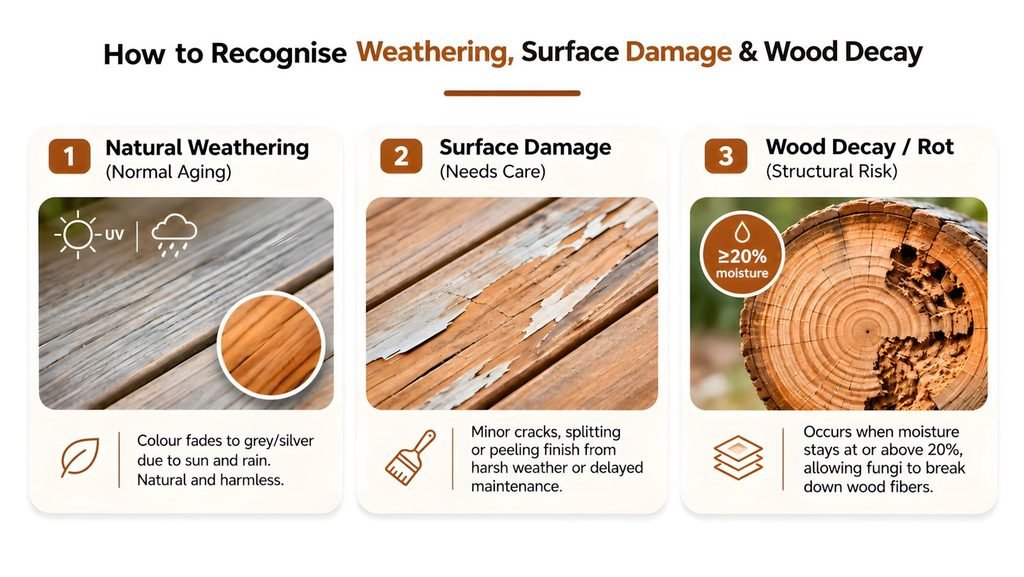
In contrast, surface damage occurs when harsh weather conditions or improper maintenance cause minor cracks, splitting, or peeling of the protective finish on the wood’s surface. The presence of such signs indicates that the wood needs recoating or maintenance. Wood decay is different from both of these and refers to fungal rotting, which is more critical to identify and address in time.
Wood decay happens when moisture inside the wood is 20% or higher and fungal spores can proliferate there. Weathering only changes the color of the wood, but fungi damage the internal fibers, making the wood feel spongy, soft, or brittle, and dark spots or fungal fruiting bodies may appear. If you see such spots or signs of decay on the wood, you should repair or replace the wood.
Frequently Asked Questions
Choose a finish for wood that protects against both moisture and UV rays. Also ensure proper drainage and regular maintenance so moisture doesn’t accumulate and durability remains. Regular inspections and timely refinishing can extend the wood’s life.
The best coating for exterior wood depends on its location, weather exposure, and desired appearance. Exterior paints, pigmented stains, and water-repellent treatments provide different levels of protection. Always use a coating suitable for outdoor use.
Yes, sunlight’s UV rays can fade the wood’s natural color and gradually damage its surface. UV-resistant finishes and pigmented stains help slow this process. For long-term results, it’s important to inspect the wood regularly and maintain it.
Exterior wood should be retreated when the protective finish begins to wear or when the water repellency starts to decline. The treatment interval depends on weather conditions, sunlight exposure, and the product type. Regular inspections let you perform maintenance at the right time.
No, they have different purposes. Preservation protects wood from decay-causing fungi and certain insects, while water-repellent treatments reduce moisture absorption. The best approach is to choose treatments based on the wood species and conditions.