
Charred
Wood
Timber transformed by controlled fire. A surface sealed against decay, water and insect — preserved for a century without stain or paint.
Minutes to carbonise. Decades to weather.
Yakisugi is the traditional Japanese technique of burning the surface of sugi (Japanese cedar) — today adapted to pine, cedar and larch — to form a protective carbonised crust. The char seals the wood against water, fire, rot and insect, and in its unoiled form needs no chemical sealer.
What arrives on site is timber that has already weathered its first fire, finished in the exact shade and texture your project requires.
*Service-life figure reflects standard industry performance for charred cladding in exterior applications, using Thermowood pine substrate on a properly vented rainscreen. Fire class per EN 13501-1 Declaration of Performance for the Thermowood substrate. Independent test reports and warranty terms available on project request.
The fire does the preserving.
The craftsman only guides it.
Fifteen shades. One raw material.
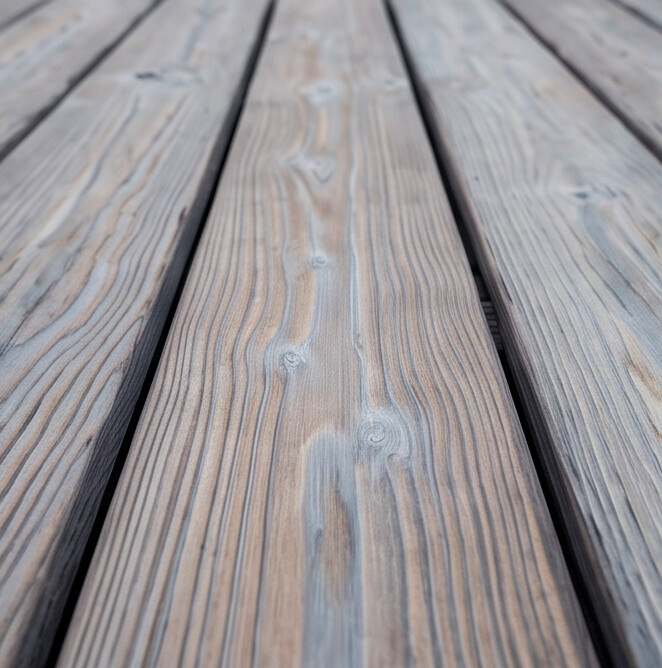 01 / 15
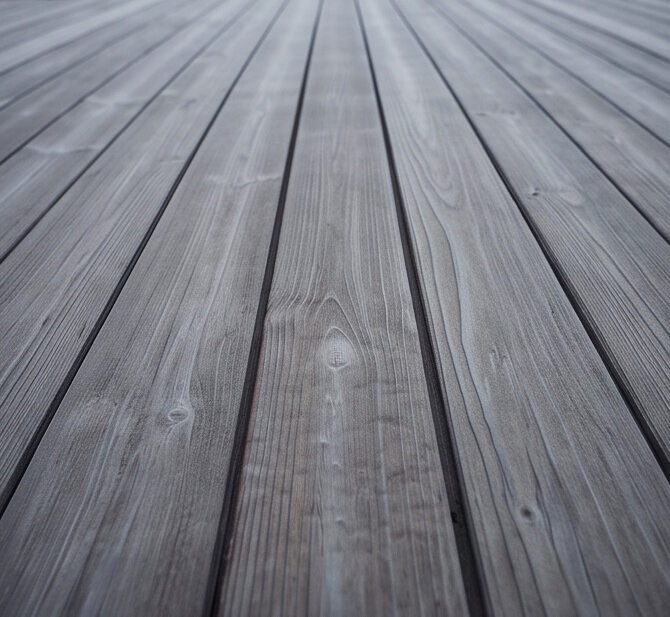 02 / 15
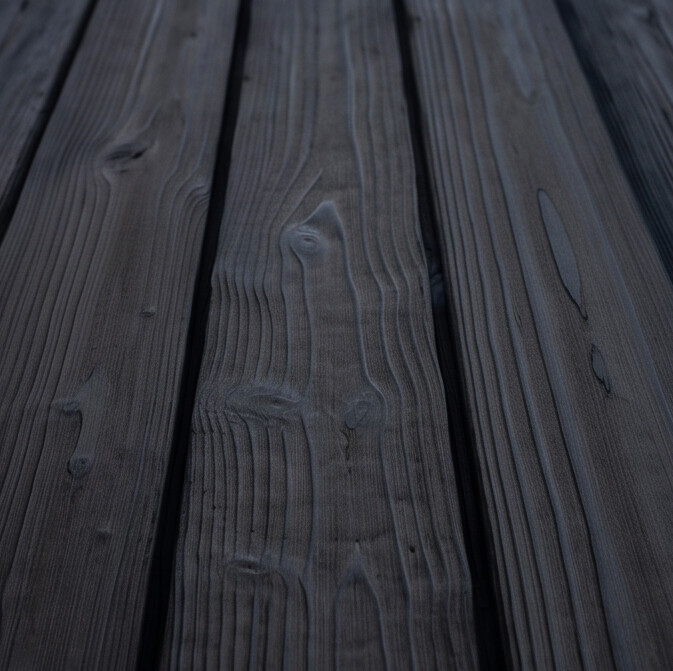 03 / 15
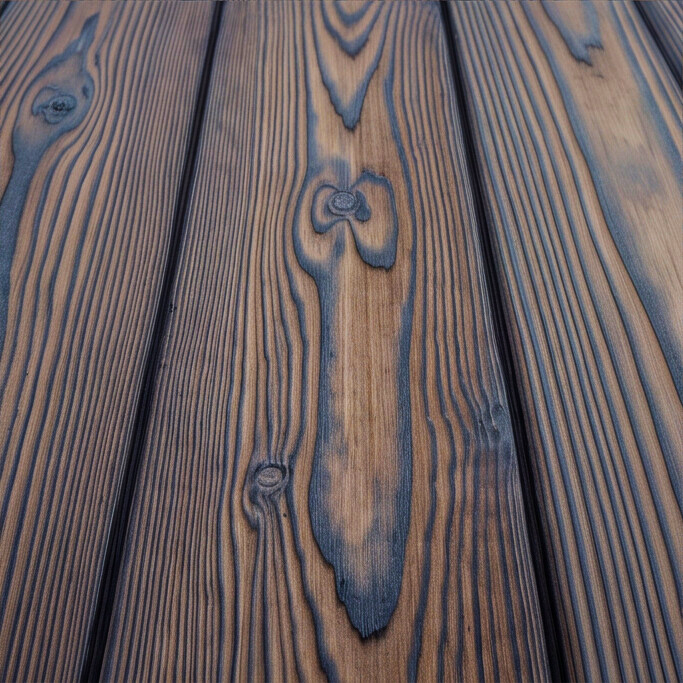 04 / 15
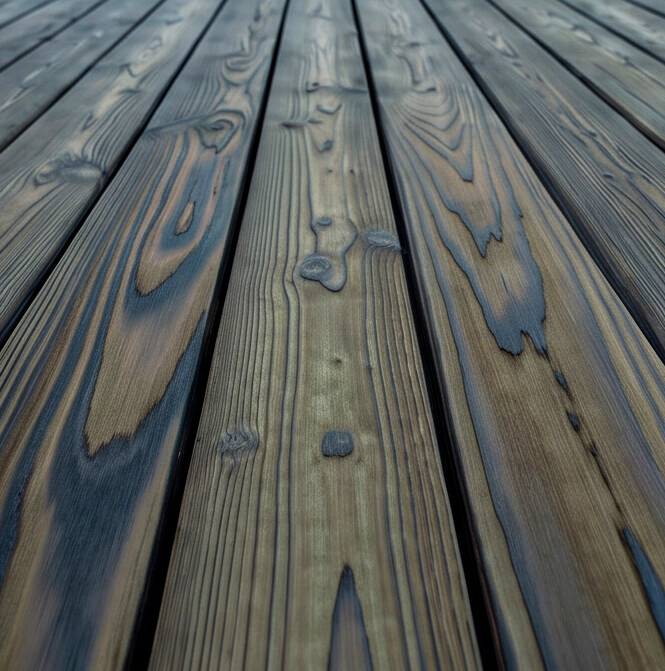 05 / 15
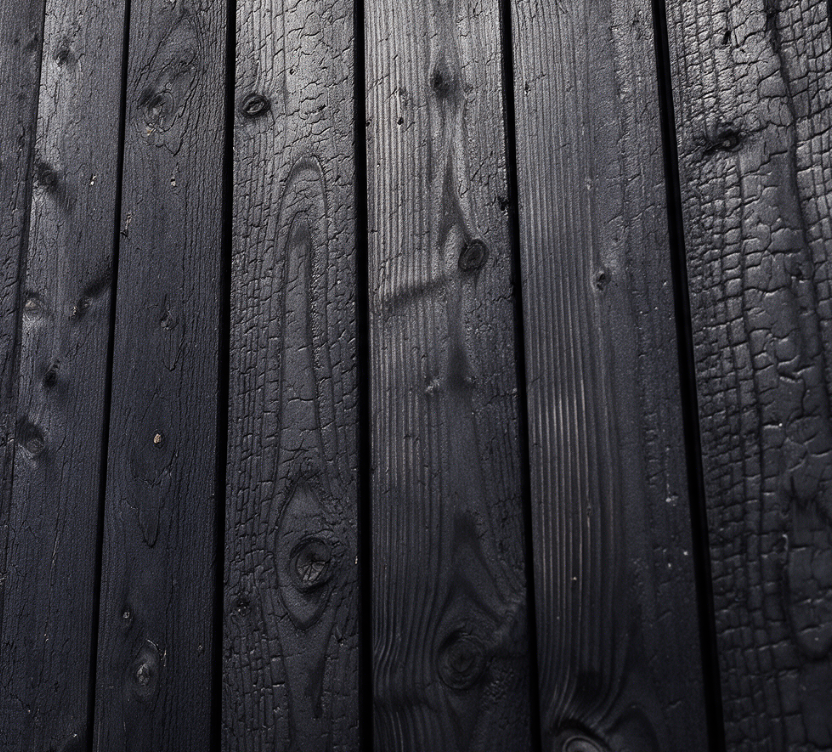 07 / 15
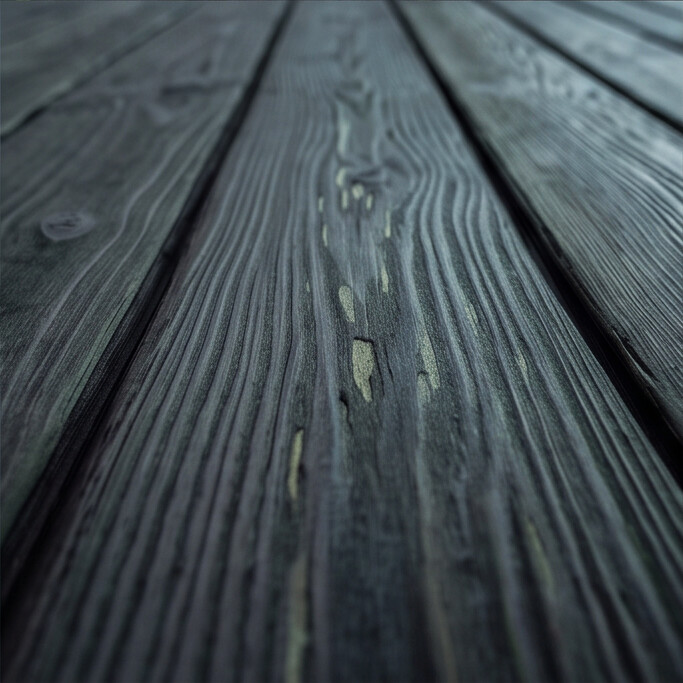 10 / 15
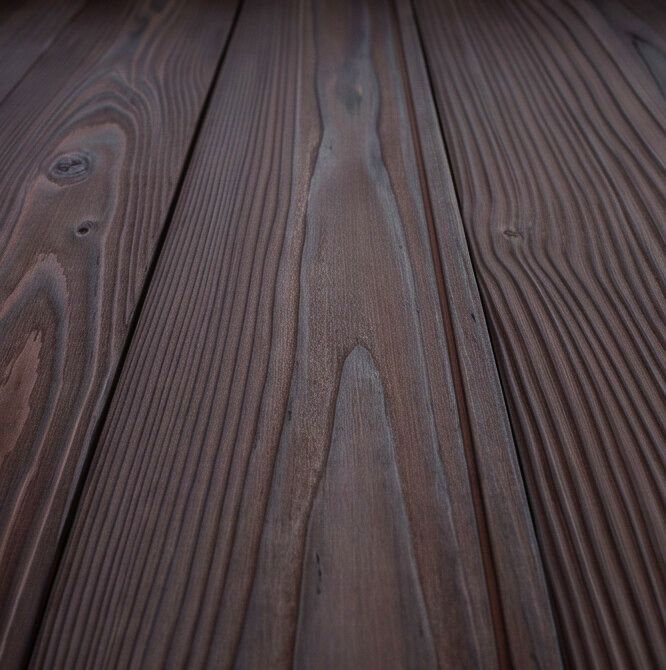 11 / 15
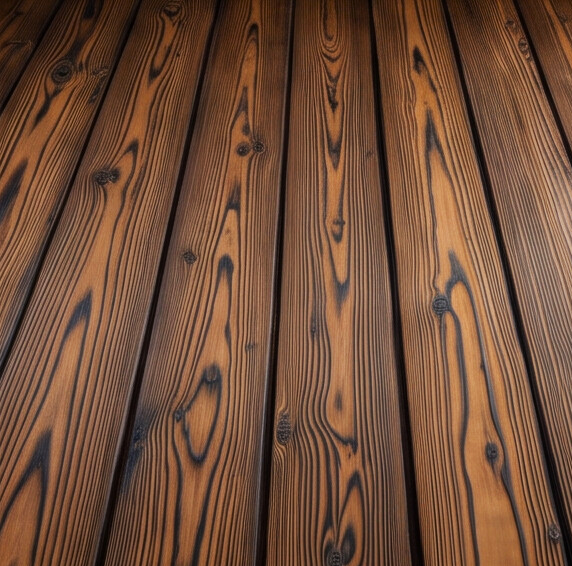 13 / 15
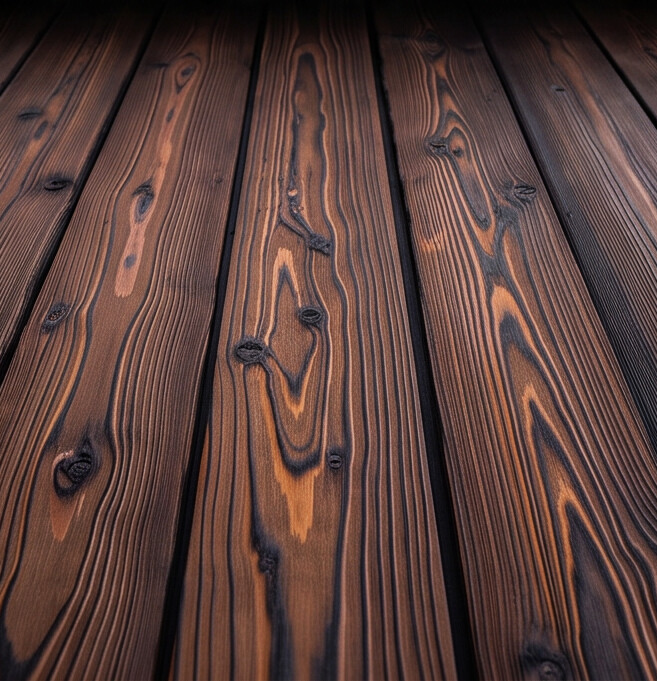 14 / 15
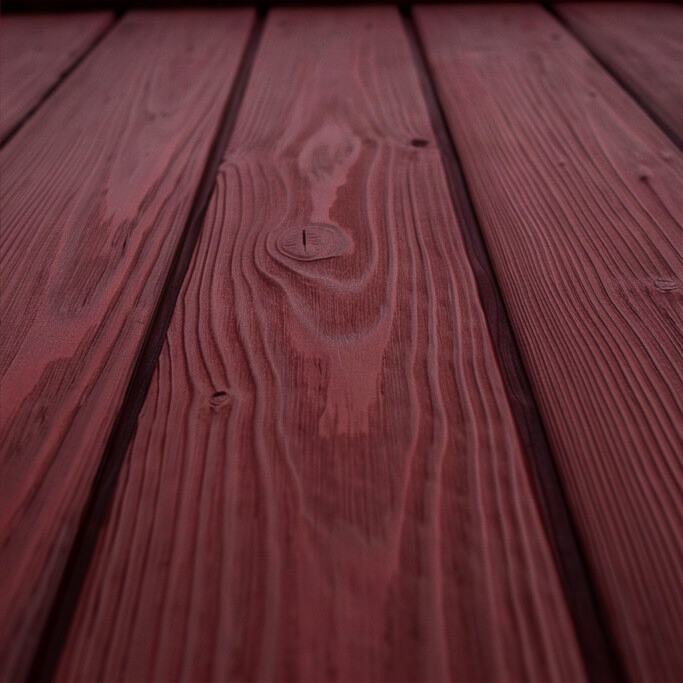 15 / 1501 / 1502 / 1503 / 1504 / 1505 / 1507 / 1510 / 1511 / 1513 / 1514 / 1515 / 15
Four stages. One ancient technique.
Select
Grade A kiln-dried species — pine, cedar, hemlock, larch — milled to specification and moisture-balanced to 8 ± 2%.
Char
Intense open flame carbonises the surface in a controlled triangular stack, following the traditional sankaku-gumi method. Char depth is tuned from 2 to 6 mm.
Finish
Water-cooled, then wire-brushed to the exact character — soft matte, rugged texture, or deep-brushed with grain relief.
Install
Shiplap, open-joint, batten-screen or tongue-and-groove profiles on a vented rainscreen cavity.
Species, finishes and profiles.
Every project is specified from the species up. Below are the standing options; non-standard combinations are quoted on request.
- Species
- Southern Yellow Pine · Western Red Cedar · Siberian Larch · Accoya · Thermowood Pine
- Finishes
- Suyaki (soft, untouched crust) · Gendai (wire-brushed, muted) · Pika-Pika (deep-brushed, high-contrast grain)
- Profiles
- Shiplap · Tongue-and-groove · Open-joint rainscreen · Batten-on-batten · Reverse board-and-batten
- Thickness · width
- 18 to 32 mm · 90 to 220 mm
- Lengths
- 2.4 / 3.0 / 3.6 m standard · project lengths to 4.8 m
- Fire class
- EN 13501-1 Class D-s2,d0 (Thermowood pine substrate)
- Density · conductivity
- 380–520 kg/m³ · 0.09 W/mK
- Fixing · maintenance
- A2 stainless on vented cavity · optional light oil at 10 years
Specified for buildings that need to age with intent.
Rainscreens that outlive the warranty.
Full-elevation cladding on residential, hospitality and institutional projects. Rated for marine, high-humidity and alpine environments where ordinary timber fails within a decade.
- Villas & farmhouses
- Boutique hotels
- Public pavilions
- Boundary walls
Depth and texture without the maintenance.
Deep-brushed finishes bring warmth and sculptural depth to living rooms, lobbies, bedrooms and ceilings. The surface is sealed by the char itself — no oiling, no waxing, no finishing coat.
- Feature walls
- Headboards
- Ceiling panels
- Column cladding
A material that tells the story.
Restaurants, spas, saunas and resorts specify charred wood for its weathering, resilience and distinctly Japanese sensibility. It patinas on its own schedule — the brand image gets to breathe.
- Restaurant interiors
- Spa & sauna rooms
- Resort facades
- Retail & galleries
Specify with confidence.
Hold the finish in your hand before you commit. Three shades, same batch, dispatched in 48 hours.