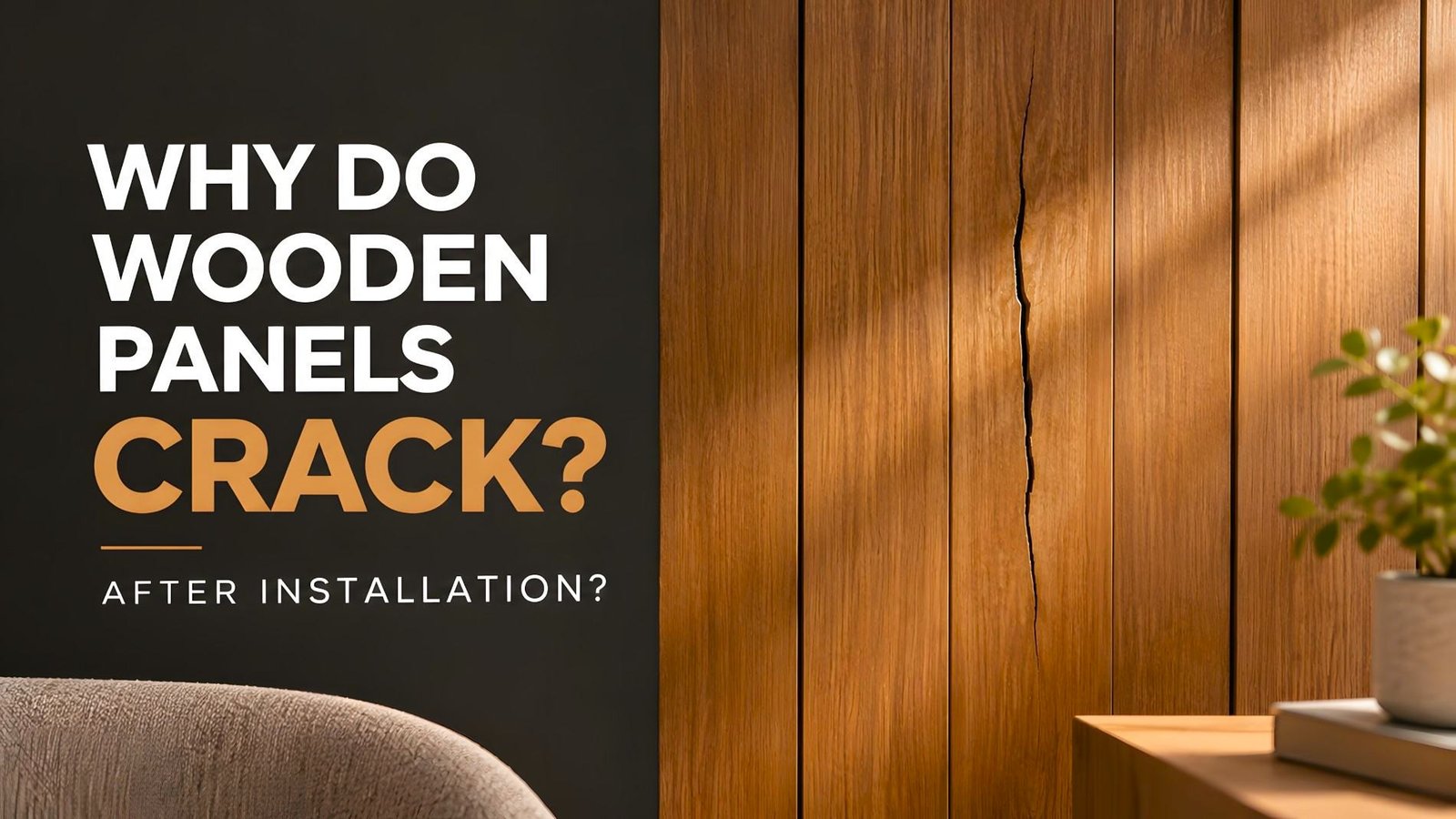
Whenever we install wooden panels in our homes or offices, they look very premium for some time, but after a while, they may develop cracks. However, the reason is not the same for every crack. Wood moisture content, improper installation, restricted movement, or construction issues can be responsible.
Wood is a natural material that absorbs and releases moisture from its surrounding environment. This can cause it to swell or shrink. However, if this movement is not properly accommodated, the panels may develop cracks, edge splitting, or gaps at the joints. Therefore, it is important to understand what cracks in wooden panels actually mean.
The Science Behind Wood Cracking
Wood is a hygroscopic material, which means it absorbs or releases moisture according to the humidity of the surrounding air. According to the USDA Forest Products Laboratory’s Wood Handbook, changes in moisture content can affect the dimensions and performance of wood. However, wood does not shrink equally in every direction because its natural cellular structure and grain direction affect movement differently. If the surface and inner portions of the wood dry at different rates, internal stress can develop. When this stress exceeds the strength of the wood, cracks may develop.
Main Causes of Wooden Panel Cracking
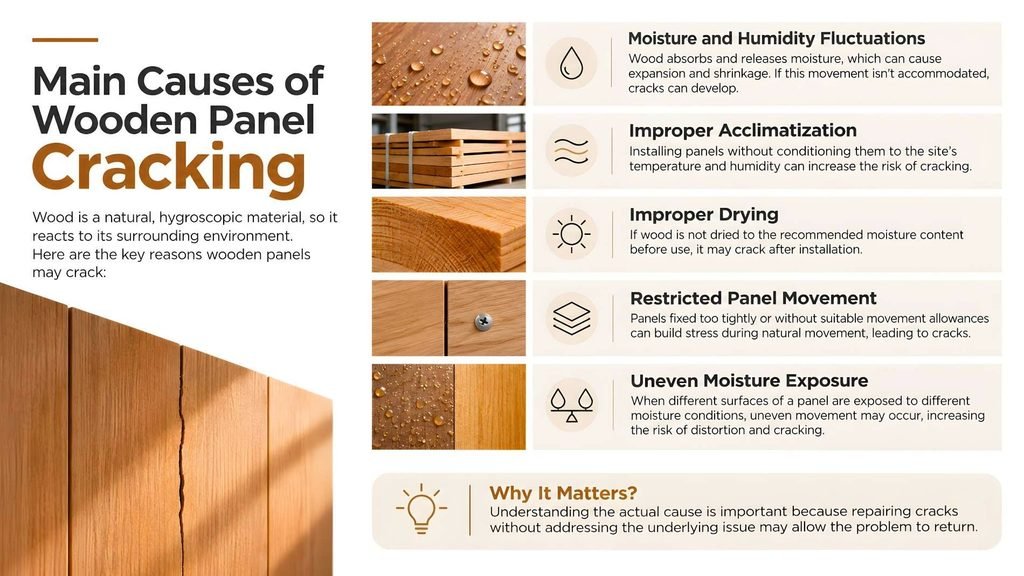
Wood is a natural, hygroscopic material, so it reacts to its surrounding environment. Some reasons wooden panels crack include:
Moisture and Humidity Fluctuations
Wood is a natural material that releases and absorbs moisture from the environment, causing changes in its dimensions. Therefore, if wood absorbs moisture after installation, it may expand, and after releasing moisture, it may shrink. If this movement is not properly accommodated, cracks can develop in the wood.
Improper Acclimatization
Cracking can also occur if a wood panel is installed without being properly conditioned for the installation environment. Depending on the panel type and manufacturer’s recommendations, some panels may need time to adjust to the temperature and humidity of the environment before installation.
Improper Drying
If wood is not properly dried before use, changes in its moisture content after installation can cause cracking.
Restricted Panel Movement
Panels that are fixed too tightly or installed without suitable movement allowances may develop stress when natural movement occurs. This can cause the panels to crack.
Uneven Moisture Exposure
If different surfaces of a panel are exposed to different moisture conditions, uneven movement may occur. This can increase the risk of distortion and, under suitable conditions, cracking.
Understanding the actual cause of these issues is important because repairing cracks without addressing the underlying cause may allow the problem to return.
Read Also : How Thermowood compares with traditional wood in changing moisture conditions
How Do Different Types of Wooden Panels Crack?
The construction of every wooden panel is different, so the causes of cracking also vary depending on the material.
| 1. | Solid Wood Panels | Solid wood can expand or shrink with changes in moisture. Uneven drying, natural grain variations, and restricted movement can cause cracking or splitting. |
| 2. | Wood Veneer Panels | Veneer panels have a thin layer of natural wood bonded to a substrate. If the veneer and substrate respond to moisture and move at different rates, cracks may develop in the veneer or its surface finish. |
| 3. | Plywood Panels | These engineered wood panels are manufactured using adhesives and wood fibres. Excessive moisture exposure can cause thickness swelling, particularly at exposed edges. Surface deterioration, finish cracking, or other damage may also occur depending on the moisture exposure and stresses placed on the material. |
| 4. | 3D Wooden Panels | Fluted, grooved, or 3D wooden panels may be made from veneer, solid wood, or engineered wood. Deep grooves, thin sections, fixing points, or unsuitable installation conditions can contribute to cracking, depending on the panel construction. |
Installation Mistakes That Cause Wooden Panels to Crack
Improper installation can increase the risk of cracks in wood panels. Panels should be installed correctly and according to the manufacturer’s guidelines.
Not Leaving Enough Expansion Space
Wood dimensions can change with different seasons and environmental conditions. Wood may either shrink or swell. Therefore, suitable movement allowances should be provided at panel edges, corners, and joints wherever required by the panel system. The necessary spacing depends on the material, panel construction, and manufacturer’s installation instructions.
Improper Fastening Methods
Wooden panels should be installed using fastening or adhesive systems suitable for their construction and intended application. Incorrect fixing, excessive restraint, or insufficient movement allowance can contribute to stress and cracking. The manufacturer’s recommendations for fastener placement, fixing methods, and expansion requirements should be followed.
Ignoring Acclimatization and Storage
Storing panels in unsuitable conditions or failing to condition them according to the installation environment, where required, can increase the risk of cracking after installation. APA guidance also recommends suitable storage and, where practical and appropriate for the panel type, acclimatization.
The material type, moisture condition, and manufacturer’s fixing instructions should be considered before installation. Not every crack is caused by installation, but correct installation can reduce preventable problems.
Why Do Wooden Panels Crack at Edges, Joints, and Corners?
Cracks do not develop in the same way in every wooden panel. To understand different cracks, it is important to understand their causes. The location of a crack can provide clues about its cause.
- Exposed end grain in solid wood can absorb liquid water more rapidly than many other wood surfaces. In engineered panels, exposed edges may also be vulnerable to moisture-related swelling or deterioration, depending on the panel construction and protective finish. Moisture changes, inadequate edge protection, or installation stresses can contribute to edge damage and cracking.
- Cracks near screws may develop when excessive stress occurs at the fixing point, when a screw is installed too close to the edge, or when the wood splits during screw installation. To prevent this, proper drilling methods and the manufacturer’s recommended fixing distances should be followed.
- Gaps between adjacent panels may be related to dimensional movement, joint failure, or installation conditions. Solid wood panels may shrink when they lose moisture, while incorrect spacing or fixing can cause joint problems in engineered panels.
- If panels are joined too tightly without suitable movement allowances, or if corners and cutouts are not properly detailed, stress may develop as the wood expands or shrinks. This can contribute to cracking at corners and around cutouts.
The location of a crack can provide an indication of its possible cause, but it may not always identify the exact cause. Moisture conditions, panel construction, and fixing conditions should be examined together.
How to Identify the Actual Cause of Wooden Panel Cracks
To understand the actual cause of cracks in panels, their location, direction, and appearance should be examined. Fine lines on the surface running parallel to the grain may indicate veneer checking. However, swelling at the edges or gaps at the joints may indicate a moisture-related problem. If the surface layers of plywood are separating, it may indicate a bonding problem. Cracks around screws and corners may require an evaluation of the fixing method. Dampness or water leakage behind the panels may also indicate moisture-related damage.
However, the exact appearance of a crack alone may not identify its cause. Moisture conditions, material type, and installation details should also be examined.
How to Prevent Wooden Panels from Cracking After Installation
To reduce the risk of cracking, the condition of the panels and the site environment should be checked before installation. Panels should be stored in a dry, protected area and supported according to the manufacturer’s storage recommendations. For wall panels, the substrate should be properly dry and prepared.
Panels should be inspected from time to time, especially at joints, corners, and areas exposed to direct sunlight. Indoor moisture and humidity should be kept reasonably stable. Panels should be cleaned regularly and gently. Excessive water or harsh chemicals should not be used for cleaning.
According to the technical guidance of the USDA Forest Products Laboratory, controlling wood moisture content and accommodating dimensional movement are important parts of managing the risk of cracking and related defects.
How to Repair Cracked Wooden Panels
The repair method depends on the extent and depth of the damage. If the crack is only on the surface, refinishing may improve its appearance. Small, stable cracks in solid wood may be repaired with suitable wood fillers. However, filler does not restore the wood’s original strength in every situation.
Veneer panels with surface checking may require veneer-compatible repairs or refinishing. For MDF and HDF, filling the crack alone is not sufficient when swelling or other significant moisture-related damage has occurred. Before repairing the crack, moisture leakage, excessive movement, or installation-related problems must be identified and corrected. Otherwise, the crack may develop again.
If a panel is severely split, warped, or damaged, repair may be difficult. In such cases, the condition of the panel should be assessed, and replacement may be necessary.
Frequently Asked Questions About Wooden Panel Cracking
Yes, cracked wood can still be used, depending on the size, location, depth of the crack, and intended application. Wood with small cracks may still be suitable for certain decorative purposes. However, deep cracks can affect structural strength and may require professional assessment.
Suitable wood coatings can help slow moisture exchange and reduce rapid moisture changes. However, coating cannot completely stop the wood’s natural expansion and contraction or guarantee that cracks will not develop.
A wooden panel may need replacement if it has deep cracks, severe swelling, warping, widespread water damage, or delamination that affects its performance or appearance. Minor surface cracks may be repaired using suitable methods. The extent of damage and the panel’s intended use should be assessed before deciding whether repair or replacement is necessary.